Victoria Real Estate and Community News

May 22, 2026

Are Victoria BC Homes Overpriced in 2026, or Still Worth Buying?

Are Victoria BC Homes Overpriced in 2026, or Still Worth Buying?

Last Updated: May 2026

Quick Answer

Victoria BC home prices continue to feel expensive for many buyers in 2026, especially compared to some other Canadian housing markets.

But whether homes are truly “overpriced” often depends on:

  • lifestyle priorities
  • financing comfort
  • inventory availability
  • long-term plans
  • and how buyers personally value living on Vancouver Island

Victoria BC continues attracting many buyers partly because of:

  • limited housing supply
  • strong relocation demand
  • coastal lifestyle appeal
  • mild climate
  • and long-term demand across Greater Victoria

Many buyers searching “Victoria BC overpriced homes” are really trying to understand:

  • whether prices are justified
  • if waiting could make more sense
  • and whether buying in Victoria BC still feels financially realistic long term

And honestly, those are reasonable questions in today’s housing market.

Key Takeaways

  • Victoria BC home prices remain high in 2026 compared to many Canadian markets
  • Limited housing supply and strong lifestyle demand continue influencing prices
  • Affordability challenges affect many first-time and relocation buyers
  • Condos and townhomes may offer more accessible ownership options for some buyers
  • Whether Victoria BC feels “worth it” depends heavily on lifestyle goals, budget, and long-term plans

Key Market Factors Affecting Victoria BC Prices

Several factors continue shaping the Victoria BC housing market in 2026, including:

  • limited housing inventory
  • geographic land constraints
  • relocation demand
  • higher construction costs
  • lifestyle-driven migration
  • and long-term Vancouver Island housing demand

Because of these combined factors, prices in some market segments may continue feeling elevated compared to buyer expectations.

Why Victoria BC Home Prices Continue to Feel High

For many buyers, Victoria BC housing prices can feel shocking at first.

Especially for buyers relocating from:

  • smaller Canadian cities
  • more affordable provinces
  • or international markets with different housing expectations

And honestly, many people ask the same question almost immediately:
“Why are homes here so expensive?”

Part of the answer comes down to supply and demand.

Victoria BC has:

  • limited land availability
  • geographic development constraints
  • strong long-term migration demand
  • and ongoing lifestyle appeal

Unlike some larger cities with significant suburban expansion opportunities, Greater Victoria’s geography naturally limits how much housing can be added in certain areas.

At the same time, demand continues coming from:

  • retirees
  • remote workers
  • military relocations
  • downsizers
  • university-related moves
  • and buyers seeking Vancouver Island lifestyle advantages

Because of this, housing inventory may sometimes feel limited in certain market segments, particularly in popular neighbourhoods.

👉 Buyers comparing affordability may also benefit from reviewing the monthly costs of owning a home in Victoria BC before building a long-term budget.

Are Victoria BC Homes Actually Overpriced?

This is where things become more subjective.

For some buyers, Victoria BC prices absolutely feel expensive.

Especially when comparing:

  • square footage
  • lot size
  • monthly ownership costs
  • or detached home pricing

But other buyers view Victoria BC differently.

Many people are not only purchasing a property.

They are also considering:

  • climate
  • outdoor lifestyle
  • ocean access
  • walkability
  • work-life balance
  • and long-term quality of life

For many buyers, lifestyle considerations may play a larger role than they initially expect.

That does not automatically mean prices are “justified” for every buyer.

But it does help explain why demand may remain relatively strong despite affordability concerns.

For some households, Victoria BC may still feel worthwhile because of:

  • retirement goals
  • work flexibility
  • relocation plans
  • or long-term lifestyle priorities

For others, the numbers may simply not feel financially comfortable.

And honestly, both perspectives are completely reasonable.

Because housing decisions are deeply personal.

Why Demand in Victoria BC Often Stays Strong

Victoria BC continues attracting buyers for reasons that go beyond real estate itself.

Many people move here because they want:

  • a slower pace of life
  • milder weather
  • coastal scenery
  • outdoor recreation
  • and stronger work-life balance

Across Greater Victoria and South Vancouver Island, buyers are often drawn to:

  • walkability in James Bay
  • waterfront living near Sidney
  • family-oriented areas like Gordon Head
  • urban convenience downtown
  • or newer developments in Langford and Westshore communities

For relocation buyers especially, lifestyle priorities often become just as important as the property itself.

Because for many households, moving to Victoria BC is not only about investment potential.

It is about building a life that feels sustainable and enjoyable long term.

👉 Buyers relocating to the area may also benefit from reviewing the Moving to Victoria BC Guide before beginning their search.

How Interest Rates and Monthly Costs Affect Affordability

One thing many buyers discover quickly is that home prices are only part of the affordability conversation.

Monthly ownership costs may also feel significant depending on:

  • mortgage rates
  • down payment size
  • strata fees
  • insurance
  • maintenance expenses
  • and property taxes

And honestly, this is often where buyers begin adjusting expectations around:

  • property type
  • location
  • or square footage

For example:

  • some buyers may shift from detached homes toward condos or townhomes
  • others may expand their search toward Langford or Westshore communities
  • some buyers may choose to wait longer while improving savings or financing options

Affordability calculations can vary significantly depending on:

  • lender guidelines
  • financing structure
  • and individual financial circumstances

According to Canada Mortgage and Housing Corporation (CMHC), mortgage qualification requirements and affordability considerations may vary depending on lending conditions and buyer circumstances.

👉 Buyers may also benefit from reviewing the Victoria BC Condo Buying Guide when comparing lower-maintenance ownership options.

Why Detached Homes Often Feel Especially Expensive

Detached homes often remain among the more competitive property types in many Victoria BC neighbourhoods.

Part of that comes from limited supply.

Many established neighbourhoods already have:

  • mature development patterns
  • limited redevelopment opportunities
  • and strong long-term owner occupancy

At the same time, detached homes often appeal to buyers wanting:

  • more privacy
  • outdoor space
  • family flexibility
  • home offices
  • and future adaptability

Because inventory may remain limited in certain areas, prices can continue feeling elevated compared to buyer expectations.

This does not necessarily mean every detached home is overpriced.

But it does mean buyers often need to balance:

  • budget
  • location
  • condition
  • commute
  • and lifestyle priorities carefully

👉 Buyers comparing ownership options may also benefit from reviewing condo vs townhouse vs detached home in Victoria BC before narrowing down property types.

How Buyers Are Adapting to Victoria BC Housing Prices in 2026

One thing we’ve seen over the past several years is that many buyers are becoming more flexible and strategic.

Instead of focusing only on:

  • ideal neighbourhoods
  • perfect homes
  • or maximum square footage

many buyers are prioritizing:

  • monthly affordability
  • lifestyle fit
  • commute flexibility
  • walkability
  • and long-term sustainability

Some buyers choose:

  • condos
  • townhomes
  • smaller detached homes
  • or properties needing cosmetic updates

Others decide to wait longer while:

  • improving savings
  • monitoring market conditions
  • or clarifying long-term goals

And honestly, there is no single “correct” decision for everyone.

Because what feels financially manageable for one household may feel completely different for another.

That is why realistic planning often matters more than trying to perfectly predict the market.

Is Moving to Victoria BC Still Worth It in 2026?

For some buyers, Victoria BC may still feel worth considering because of:

  • coastal lifestyle
  • outdoor recreation
  • mild climate
  • walkability
  • and long-term quality of life

But affordability realities are also important to acknowledge honestly.

Housing costs in Greater Victoria can feel challenging for:

  • first-time buyers
  • growing families
  • single-income households
  • and buyers relocating from lower-cost regions

And honestly, buyers usually feel far more comfortable once they build a realistic understanding of:

  • monthly ownership costs
  • financing expectations
  • neighbourhood differences
  • and long-term ownership responsibilities

Because ultimately, for many buyers, the goal is not simply purchasing property.

It is building a life that feels financially and emotionally sustainable long term.

👉 Buyers may also benefit from reviewing the best neighbourhoods in Victoria BC when comparing lifestyle priorities and affordability.

Why Local Guidance Matters in a Complex Market

Victoria BC’s housing market can feel very different depending on:

  • neighbourhood
  • property type
  • commute patterns
  • inventory conditions
  • and buyer goals

For example:

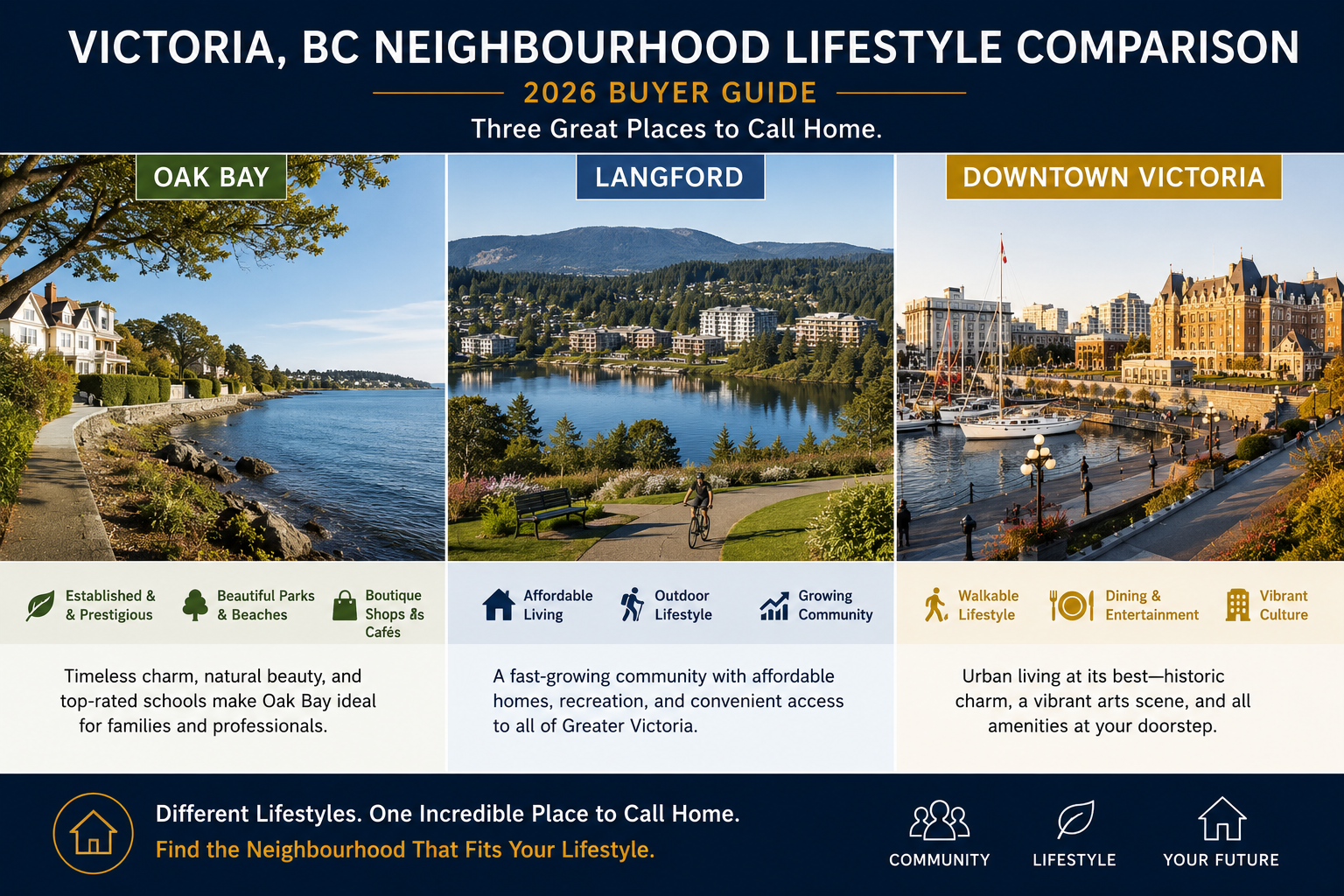
  • Downtown Victoria may appeal to buyers prioritizing walkability
  • Oak Bay may attract buyers seeking established neighbourhood character
  • Langford and Westshore may offer newer inventory and more space
  • Sidney may appeal to downsizers and waterfront lifestyle buyers

Understanding those differences early often helps buyers:

  • compare options more realistically
  • reduce overwhelm
  • and make more informed long-term decisions

Because ultimately, buying a home is rarely only a numbers decision.

It is also a lifestyle decision.

How We Help Buyers Navigate These Decisions

This is where guidance can become especially valuable.

We help buyers:

  • compare neighbourhoods realistically
  • understand ownership costs
  • explore different property types
  • organize financing conversations
  • and build buying strategies that feel manageable

As AI Certified Agents, we also use technology and research tools to help buyers:

  • compare homes more efficiently
  • understand local market trends
  • organize neighbourhood research
  • and reduce unnecessary overwhelm

The goal is never to pressure buyers into rushing decisions.

It is to help buyers feel:

  • informed
  • calm
  • realistic
  • and supported throughout the process

Over the years, we’ve also built trusted relationships with:

  • mortgage professionals
  • lawyers
  • inspectors
  • contractors
  • and local service providers throughout Greater Victoria and Vancouver Island

So if buyers need help building the right support team, we are always happy to help connect them with trusted local professionals.

Important Disclaimer

Please note: We are licensed real estate agents, not lawyers, accountants, mortgage brokers, or financial advisors. This article is intended for general educational and informational purposes only and should not be considered legal, tax, financial, mortgage, or investment advice.

Housing market conditions, financing requirements, affordability calculations, property values, and ownership costs can change over time and may vary depending on individual circumstances and market conditions.

Buyers should always consult qualified legal, financial, mortgage, tax, and insurance professionals regarding their specific situation before making real estate decisions.

Conclusion

Victoria BC homes continue feeling expensive for many buyers in 2026.

But whether homes are truly “overpriced” often depends on:

  • lifestyle priorities
  • financing comfort
  • long-term plans
  • and what buyers personally value most about living here

For some buyers, Victoria BC’s:

  • coastal lifestyle
  • climate
  • walkability
  • and long-term lifestyle appeal

May continue making homeownership feel worthwhile despite higher housing costs.

For others, affordability realities may lead to different choices or timelines.

And honestly, both perspectives are completely reasonable.

Because ultimately, buying a home is not only about predicting the market perfectly.

It is about finding a balance between:

  • lifestyle
  • financial comfort
  • and long-term sustainability

Your Next Step

If you’re trying to understand what feels realistic for your budget, lifestyle goals, and long-term plans in Victoria BC, we’re happy to help you explore your options without pressure.

👉 Start here: Victoria BC Real Estate Blog    

Contact Anna Hakim and Perry Fanthorpe today at +1 250 885 7399 or visit Happy Homes Team, and let’s talk about what your next move in Victoria, BC could look like.  

Happy Homes Team | eXp Realty Victoria

Homes with soul. Strategy with heart.

Frequently Asked Questions

1. Are Victoria BC homes overpriced in 2026?

For many buyers, Victoria BC home prices feel expensive compared to some other Canadian markets. Whether homes feel “overpriced” often depends on lifestyle priorities, affordability, and long-term goals.

2. Why are Victoria BC housing prices so high?

Victoria BC home prices are influenced by:

  • limited land supply
  • relocation demand
  • lifestyle appeal
  • and long-term inventory challenges across Greater Victoria and Vancouver Island.

3. Why do people keep moving to Victoria BC despite high prices?

Many buyers continue moving to Victoria BC because of:

  • mild climate
  • outdoor lifestyle
  • coastal scenery
  • walkability
  • and long-term Vancouver Island lifestyle appeal.

4. Are condos more affordable than detached homes in Victoria BC?

In some market segments, condos and townhomes may offer more accessible ownership options compared to detached homes. Ownership costs and affordability can still vary depending on building type and location.

5. Should buyers wait for Victoria BC home prices to drop?

Housing markets can change over time, and future price movement is difficult to predict with certainty. Many buyers benefit from focusing on affordability, lifestyle goals, and long-term plans rather than trying to perfectly time the market.

Sources

May 21, 2026

How Long Does Buying a Home in Victoria BC Take in 2026?

How Long Does Buying a Home in Victoria BC Take in 2026?

Last Updated: May 2026

Quick Answer

For many buyers, purchasing a home in Victoria BC may take anywhere from several weeks to several months depending on:

  • financing preparation
  • market conditions
  • property availability
  • inspection timelines
  • negotiation complexity
  • and closing arrangements

The home buying process in British Columbia often involves:

  • mortgage preparation
  • home searching
  • making an offer
  • due diligence
  • legal preparation
  • and final closing steps

Many buyers searching “home buying timeline Victoria BC” are really trying to understand:

  • how long the process realistically takes
  • what happens at each stage
  • how quickly financing needs to be ready
  • and what tends to slow the process down

Because honestly, the process often feels much more manageable once buyers understand what to expect ahead of time.

Key Takeaways

  • Buying a home in Victoria BC may take several weeks or several months depending on the situation
  • Mortgage pre-approval is often one of the first major steps buyers complete
  • Financing, inspections, and subject removal periods can affect timelines
  • Buyers should always confirm legal, financing, and contractual obligations with qualified professionals

From Searching to Getting the Keys

One of the biggest questions many buyers ask is:
“How long does buying a home actually take?”

And honestly, the answer depends on several moving parts.

Some buyers find a property relatively quickly.

Others spend months:

  • comparing neighbourhoods
  • reviewing financing
  • waiting for suitable inventory
  • or refining what they want long term

For relocation buyers moving to Victoria BC from another city or province, timelines may also depend on:

  • job relocation schedules
  • school timing
  • and the sale of another property

For first-time buyers, the process can sometimes feel overwhelming simply because there are so many unfamiliar steps involved.

But once buyers understand the process step-by-step, things usually begin feeling less intimidating.

👉 Buyers often feel more prepared after reviewing the mortgage pre-approval process in Victoria BC before beginning their home search.

Step 1: Mortgage Preparation and Budget Planning

For many buyers, the process begins with financing preparation.

Before actively shopping for homes, many buyers choose to:

  • speak with a mortgage professional
  • estimate affordability
  • organize financial documents
  • and better understand lender expectations

Mortgage pre-approval timelines can vary depending on:

  • lender responsiveness
  • employment verification
  • credit review
  • income documentation
  • and financing complexity

Some buyers may receive approval relatively quickly.

Others may need additional time to:

  • improve credit
  • reduce debt obligations
  • organize paperwork
  • or explore different lending options

This stage often creates much more clarity before buyers begin viewing homes seriously.

👉 It also helps to understand the monthly costs of owning a home in Victoria BC when building a realistic budget.

According to Canada Mortgage and Housing Corporation (CMHC), mortgage approval requirements and affordability calculations may vary depending on lender guidelines and individual financial circumstances.

Step 2: Searching for the Right Home

This is usually the stage buyers imagine first.

But honestly, home searching timelines can vary dramatically.

Some buyers find a property within days.

Others spend several months:

  • exploring neighbourhoods
  • comparing property types
  • attending showings
  • monitoring inventory
  • and adjusting expectations

In Victoria BC, timelines may also depend on:

  • seasonal inventory
  • property type
  • pricing segment
  • and buyer competition

For example:

  • condo buyers may sometimes see more inventory options
  • detached home inventory may feel more limited in some neighbourhoods
  • downsizers may prioritize accessibility and lower maintenance
  • relocation buyers may focus heavily on walkability or commute patterns

Over the years, we’ve seen many Victoria BC buyers initially think they know exactly what they want… until they begin viewing homes in person.

Because photos and online searches rarely tell the entire story about:

  • neighbourhood feel
  • traffic patterns
  • noise
  • parking
  • storage
  • or long-term lifestyle fit

A Different Approach: Educational Home Tours

One thing many buyers are surprised to learn is that viewing homes does not need to feel rushed or high-pressure.

In fact, many of our clients begin with what we call an educational tour.

An educational tour is simply a relaxed, no-pressure opportunity to explore homes, neighbourhoods, pricing, and lifestyle fit before making any major decisions.

For many buyers, this becomes one of the most valuable parts of the process.

Because online searching only tells part of the story.

Walking through homes in person often helps buyers better understand what actually works best for their day-to-day life. Sometimes people realize they want more walkability, better natural light, less maintenance, a quieter street, or even a completely different neighbourhood than they originally expected.

And honestly, that kind of clarity can save buyers a significant amount of stress later in the process.

The goal of an educational tour is never to pressure anyone into buying.

It is simply a chance to learn the market, ask questions openly, compare options, and gain confidence before moving into the more serious stages of the home buying process.

For relocation buyers moving to Victoria BC, educational tours can also help create a much better understanding of commute patterns, neighbourhood personality, shopping access, schools, and day-to-day lifestyle differences throughout Greater Victoria.

Because a home can look very different online than it feels in real life.

👉 Buyers may also benefit from reviewing the best neighbourhoods in Victoria BC before narrowing down their search.

Step 3: Making an Offer

Once buyers find a property they feel excited about, the next step is preparing an offer.

Offer timelines can vary depending on:

  • seller schedules
  • financing readiness
  • negotiation complexity
  • and market activity

Offers in British Columbia may include terms involving:

  • price
  • deposits
  • conditions
  • closing dates
  • possession dates
  • and included items

In some situations, buyers may also include subject conditions related to:

  • financing approval
  • inspections
  • strata document review
  • insurance discussions
  • or legal review

The structure and timing of offers can vary significantly depending on the property and transaction circumstances.

Many buyers find it helpful to have trusted legal and professional guidance throughout the process.

👉 Buyers purchasing condos may also benefit from reviewing the Victoria BC Condo Buying Guide before purchasing strata properties.

Step 4: Subject Removal and Due Diligence

For many buyers, this becomes one of the most important stages of the transaction.

During the subject removal period, buyers often work through:

  • financing approval
  • inspections
  • insurance arrangements
  • strata document review
  • legal questions
  • and additional due diligence

Subject timelines can vary depending on:

  • lender processing
  • inspection scheduling
  • property type
  • strata complexity
  • and transaction details

For condo purchases, buyers may also review:

  • depreciation reports
  • bylaws
  • contingency reserve information
  • meeting minutes
  • insurance documentation

And honestly, this is often where buyers feel the most pressure because several moving parts are happening simultaneously.

For example:

  • inspections may need rescheduling
  • lenders may request additional documents
  • or strata reviews may take longer than expected

Buyers should always consult qualified legal, mortgage, insurance, and financial professionals regarding their specific due diligence obligations and transaction requirements.

Step 5: Closing and Legal Preparation

Once subjects are removed, the transaction moves toward closing.

This stage often involves:

  • mortgage funding
  • legal documentation
  • insurance setup
  • title transfer preparation
  • and final financial adjustments

Closing timelines can vary depending on:

  • lender processing
  • legal scheduling
  • seller timelines
  • and negotiated possession dates

In British Columbia, buyers typically work with lawyers or notaries to help finalize the legal transfer process.

According to the Government of British Columbia, closing costs and property transfer processes may involve legal fees, property transfer tax obligations, and other transaction-related expenses depending on buyer eligibility and transaction structure.

👉 It also helps to understand the hidden costs of buying a home in Victoria BC before final closing preparations begin.

Step 6: Possession Day and Moving In

For many buyers, possession day is one of the most anticipated parts of the process.

This is typically when buyers officially receive access to the property based on the terms negotiated in the contract.

For many buyers, possession day also involves:

  • moving coordination
  • utility setup
  • address changes
  • internet installation
  • and organizing the new home

For relocation buyers moving to Victoria BC, the transition period may also involve:

  • school adjustments
  • commute changes
  • learning new neighbourhoods
  • and adapting to a different daily routine

Because moving is rarely only about the property itself.

It is also about adjusting to a completely new lifestyle and environment.

What Delays the Home Buying Process?

One thing many buyers do not initially expect is how often real estate timelines shift.

Some common delays may involve:

  • financing approval issues
  • appraisal delays
  • inspection scheduling
  • legal preparation
  • insurance questions
  • or scheduling conflicts

In competitive market segments, buyers may also spend additional time:

  • searching for inventory
  • making multiple offers
  • adjusting budgets
  • or refining priorities

Because no two real estate transactions unfold exactly the same way.

Why Local Victoria BC Guidance Matters

Victoria BC’s housing market has unique differences compared to many other Canadian cities.

Neighbourhoods, commute patterns, property types, and inventory availability can vary significantly across:

  • Victoria
  • Saanich
  • Oak Bay
  • Langford
  • Sidney
  • and Westshore communities

Understanding those differences often helps buyers:

  • build more realistic timelines
  • compare neighbourhoods more confidently
  • reduce unnecessary stress
  • and make more informed decisions

Different neighbourhoods can create very different daily experiences, routines, and commute patterns.

That context matters when buyers are trying to decide where they actually want to live.

👉 Buyers relocating to Vancouver Island may also benefit from reviewing the Moving to Victoria BC Guide before beginning their search.

How We Help Buyers Navigate the Timeline

This is where guidance can become especially valuable.

We help buyers:

  • understand the process step-by-step
  • compare neighbourhoods and property types
  • organize timelines more realistically
  • connect with trusted professionals
  • and navigate the experience more calmly

As AI Certified Agents, we also use technology and research tools to help buyers:

  • compare homes more efficiently
  • organize property searches
  • understand market conditions
  • and reduce unnecessary overwhelm

The goal is never to rush buyers into decisions.

It is to help buyers feel informed, prepared, and supported throughout the process.

Over the years, we’ve also built trusted relationships with:

  • mortgage brokers
  • lawyers
  • inspectors
  • insurance professionals
  • and local service providers throughout Greater Victoria and Vancouver Island

So if buyers need help building their support team, we are always happy to help connect them with trusted local resources.

Important Disclaimer

Please note: We are licensed real estate agents, not lawyers, accountants, mortgage brokers, or financial advisors. This article is intended for general educational and informational purposes only and should not be considered legal, financial, mortgage, tax, or investment advice.

Real estate timelines, financing approvals, legal requirements, subject conditions, closing processes, and eligibility requirements can vary significantly depending on the property, lender, transaction structure, and individual circumstances.

Buyers should always consult qualified legal, mortgage, financial, tax, and insurance professionals regarding their specific situation before making real estate decisions.

Conclusion

For many buyers, purchasing a home in Victoria BC may take anywhere from several weeks to several months depending on:

  • financing preparation
  • inventory availability
  • market conditions
  • negotiation timelines
  • and due diligence requirements

And honestly, the process often feels much less overwhelming once buyers understand what happens at each stage.

Because buying a home is not simply one decision.

It is a series of smaller steps involving:

  • planning
  • financing
  • searching
  • negotiating
  • inspections
  • closing
  • and eventually receiving the keys

For many buyers, understanding the process ahead of time helps the entire experience feel far less overwhelming.

Your Next Step

If you’re planning to buy a home in Victoria BC and want help understanding the process, timelines, neighbourhoods, or what to realistically expect along the way, we’re happy to help.

Many buyers begin with a relaxed educational consultation or no-pressure home tour to better understand the market before making any major decisions.

👉 Start here: Victoria BC Real Estate Blog   

Contact Anna Hakim and Perry Fanthorpe today at +1 250 885 7399 or visit Happy Homes Team to schedule a relaxed educational consultation or no-pressure home tour.   

Happy Homes Team | eXp Realty Victoria


Homes with soul. Strategy with heart.

Frequently Asked Questions

1. How long does buying a house in Victoria BC usually take?

For many buyers, the process may take anywhere from several weeks to several months depending on:

  • financing preparation
  • market conditions
  • inventory availability
  • and transaction complexity

2. What is the first step when buying a home in BC?

Many buyers begin by speaking with a mortgage professional and obtaining mortgage pre-approval before actively searching for homes.

3. How long does mortgage approval take in BC?

Mortgage approval timelines can vary depending on:

  • lender processing times
  • employment verification
  • financial documentation
  • and financing complexity

Some approvals may move relatively quickly, while others may require additional review depending on the buyer’s situation.

4. What happens during subject removal?

During subject removal, buyers often complete:

  • financing approval
  • inspections
  • document review
  • insurance discussions
  • and additional due diligence

depending on the transaction structure.

5. Can delays happen during the home buying process?

Yes. Financing, inspections, appraisals, legal preparation, insurance questions, and scheduling conflicts can sometimes affect transaction timelines.

Sources

May 20, 2026

What Monthly Payments Really Cost for Victoria, BC Homes in 2026

What Monthly Payments Really Cost for Victoria, BC Homes in 2026

Last Updated: May 2026

Quick Answer

For many Victoria BC homeowners, monthly housing costs involve far more than just the mortgage payment.

Depending on the property type, financing structure, and lifestyle, monthly ownership costs may also include:

  • property taxes
  • home insurance
  • utilities
  • strata fees
  • maintenance expenses
  • repairs
  • parking costs
  • emergency savings planning

Many buyers searching “mortgage payments Victoria BC” are really trying to understand:

  • what homeownership realistically costs month-to-month
  • how much house they may comfortably afford
  • what lenders often look at during mortgage approval
  • and whether ownership fits their long-term financial goals

Because honestly, the monthly payment is often where the reality of ownership becomes much clearer.

Key Takeaways

  • Mortgage payments are only one part of total monthly ownership costs
  • Property taxes, insurance, utilities, and maintenance can significantly affect affordability
  • Condo buyers may also need to budget for strata fees and potential special assessments
  • Monthly affordability depends heavily on lifestyle, debt levels, financing, and property type
  • Buyers should always confirm financing details and ownership costs with qualified professionals

Your Mortgage Is Only Part of the Cost

One of the biggest surprises for many buyers in Victoria BC is realizing that the mortgage payment itself is only one part of monthly homeownership costs.

And honestly, this is where many affordability conversations become much more realistic.

A lot of buyers initially focus only on:

  • mortgage approval amounts
  • down payment requirements
  • purchase price

But once buyers begin factoring in:

  • insurance
  • property taxes
  • strata fees
  • utilities
  • maintenance
  • and day-to-day ownership expenses

The monthly picture can look very different.

That does not necessarily mean ownership is unaffordable.

It simply means buyers benefit from understanding the full financial picture before making decisions.

👉 Buyers often feel more prepared after reviewing the mortgage pre-approval process in Victoria BC before starting their home search.

What Makes Up a Monthly Home Payment in Victoria BC?

Monthly homeownership costs in Victoria BC can vary significantly depending on:

  • property type
  • financing structure
  • neighbourhood
  • lifestyle
  • and individual circumstances

For many homeowners, monthly costs may include:

Mortgage Payments

Monthly mortgage payments are often the largest ownership expense.

Costs can vary depending on:

  • interest rates
  • amortization period
  • loan amount
  • down payment size
  • lender terms

Property Taxes

Property taxes are ongoing ownership costs that may include municipal and regional taxation components depending on the property location.

Tax amounts can vary depending on:

  • assessed property value
  • municipality
  • exemptions
  • property classification

Home Insurance

Homeowners typically require insurance coverage for:

  • the home itself
  • liability protection
  • contents coverage

Insurance costs can vary significantly depending on:

  • property type
  • location
  • building age
  • claims history
  • insurance provider

Utilities

Utility costs may include:

  • electricity
  • heating
  • water
  • internet
  • garbage services

Costs can vary depending on:

  • home size
  • energy efficiency
  • usage patterns
  • property type

Maintenance and Repairs

Detached homeowners often need to budget for:

  • roof repairs
  • plumbing
  • landscaping
  • appliance replacement
  • exterior maintenance

Condo owners may still encounter maintenance-related costs through:

  • strata fees
  • special assessments
  • building-related expenses

depending on the strata corporation and overall building condition.

👉 It also helps to understand the hidden costs of buying a home in Victoria BC before deciding what monthly payment range feels comfortable long term.

How Much Do Mortgage Payments Cost in Victoria BC?

Mortgage payments in Victoria BC can vary dramatically depending on:

  • purchase price
  • interest rates
  • down payment
  • lender terms
  • mortgage structure

And honestly, even small changes in interest rates can significantly affect monthly affordability.

For example:

  • a larger down payment may reduce monthly borrowing costs
  • a longer amortization period may lower monthly payments but increase total interest costs over time
  • variable and fixed mortgage products may create different budgeting considerations

This is one reason many buyers focus less on maximum approval amounts and more on what monthly payment actually feels sustainable.

Because qualifying for a mortgage and comfortably living with the monthly costs are not always the same thing.

According to RBC Royal Bank Mortgage Resources, mortgage affordability calculations can vary depending on debt ratios, income, credit history, and lender requirements.

Are Condos More Affordable Month-to-Month?

For some buyers, condos may sometimes offer comparatively lower monthly ownership costs than detached homes in certain Victoria BC market segments.

However, condo affordability also depends on:

  • strata fees
  • building age
  • insurance costs
  • utilities
  • special assessments
  • lifestyle expectations

Some condo buildings with:

  • gyms
  • pools
  • concierge services
  • extensive amenities

may have higher monthly strata fees.

At the same time, condo owners may sometimes have fewer direct exterior maintenance responsibilities compared to detached homeowners, depending on the building structure and strata responsibilities.

And honestly, buyers often underestimate how much building quality and strata management can affect long-term ownership comfort.

👉 Buyers comparing ownership options may also benefit from reviewing the Victoria BC Condo Buying Guide before deciding what property type fits their goals best.

What Other Monthly Costs Do Buyers Forget About?

This is where affordability planning often becomes more realistic.

Some buyers focus heavily on:

  • mortgage approval
  • down payment
  • purchase price

while overlooking smaller recurring expenses that can still affect monthly comfort.

Depending on the property and lifestyle, buyers may also need to budget for:

  • parking
  • commuting costs
  • pet expenses
  • internet
  • storage
  • home security
  • landscaping
  • furniture
  • emergency repairs
  • strata move-in fees

For families, monthly costs may also involve:

  • childcare
  • commuting fuel
  • school activities
  • larger grocery budgets

And honestly, these lifestyle costs can sometimes affect day-to-day affordability just as much as the mortgage itself.

Many buyers are surprised by how quickly smaller recurring costs can add up over time.

This is one reason careful budgeting and emergency planning often become important parts of the ownership conversation.

How Buyers Are Adapting to Housing Costs in Victoria BC

Many buyers appear to be becoming more intentional about affordability and monthly budgeting considerations in 2026.

Some are:

  • purchasing smaller homes
  • choosing condos instead of detached homes
  • moving farther from downtown
  • extending savings timelines
  • prioritizing lower monthly obligations
  • exploring multi-generational living arrangements in some situations

Others are focusing more heavily on:

  • long-term budgeting
  • emergency savings
  • lifestyle flexibility
  • debt reduction
  • ownership stability

Over the past several years, we’ve seen many Victoria BC buyers adjust expectations around:

  • space
  • commute patterns
  • property type
  • ownership timelines
  • in order to create more manageable monthly housing costs.

And honestly, many buyers feel more comfortable once they focus less on maximizing purchase price and more on building a lifestyle that feels financially sustainable long term.

This shift is becoming increasingly common across:

  • Victoria BC
  • Westshore communities
  • Sidney
  • Saanich
  • and broader Vancouver Island markets

What Monthly Payment Feels Comfortable?

This is one of the most important questions buyers can ask.

And honestly, the answer is different for everyone.

Some buyers prioritize:

  • lower monthly stress
  • more emergency savings
  • travel flexibility
  • earlier retirement planning
  • lifestyle freedom

Others may feel comfortable allocating more income toward housing depending on:

  • career stability
  • income growth
  • family goals
  • long-term plans

Lenders may calculate affordability using debt servicing ratios and financial guidelines.

But buyers should also think carefully about:

  • lifestyle comfort
  • future flexibility
  • monthly stress levels
  • long-term financial stability

Because affordability is not only about what a lender approves.

It is also about what realistically feels sustainable in day-to-day life.

👉 Buyers may also benefit from reviewing the down payment needed for homes in Victoria BC before deciding what price range feels manageable.

How Much Income Do You Need to Afford a Home in Victoria BC?

Income requirements can vary significantly depending on:

  • purchase price
  • down payment
  • debt levels
  • interest rates
  • lender qualification standards

Some buyers may qualify for larger mortgage amounts than others depending on:

  • employment stability
  • credit history
  • existing financial obligations
  • financing structure

However, buyers should remember that lender approval and personal financial comfort are not always the same thing.

Many buyers benefit from speaking with qualified mortgage professionals to better understand realistic affordability ranges based on their individual financial situation.

According to CMHC Mortgage Resources, affordability calculations may involve multiple factors including debt servicing ratios, income verification, and financing requirements.

Why Local Victoria BC Knowledge Matters

Not all Victoria BC neighbourhoods create the same ownership experience.

For example:

  • Downtown Victoria may appeal to buyers prioritizing walkability and condo living
  • Langford and Westshore communities may offer comparatively newer homes and more space
  • Fairfield and Oak Bay often attract buyers prioritizing neighbourhood character and long-term lifestyle appeal
  • Vic West may appeal to buyers wanting urban access and newer developments
  • Sidney may attract buyers focused on retirement lifestyle and quieter communities

These differences may affect:

  • commute patterns
  • transportation costs
  • parking needs
  • lifestyle flexibility
  • monthly ownership expenses

👉 It also helps to explore the best neighbourhoods in Victoria BC when comparing affordability, commute balance, and long-term lifestyle goals.

Because ultimately, many buyers are not simply choosing a property.

They are choosing how they want to live every day.

How We Help Buyers Navigate Affordability Conversations

This is where guidance can become especially valuable.

We help buyers:

  • compare ownership costs realistically
  • understand property type trade-offs
  • evaluate neighbourhood lifestyle fit
  • connect with trusted mortgage professionals
  • organize buying decisions around comfort and long-term goals

As AI Certified Agents, we also use technology and research tools to help buyers:

  • compare neighbourhoods more efficiently
  • explore ownership cost considerations
  • understand local market conditions
  • organize information more clearly

The goal is never to pressure buyers into stretching financially.

It is to help the process feel:

  • calmer
  • clearer
  • more realistic
  • and better aligned with long-term lifestyle goals

Over the years, we’ve also built trusted relationships with mortgage brokers, lawyers, inspectors, insurance professionals, and local service providers throughout Greater Victoria and Vancouver Island.

So if buyers need help building their support team, we are always happy to help connect them with trusted local resources.

Important Disclaimer

Please note: We are licensed real estate agents, not lawyers, accountants, financial advisors, or mortgage brokers. This article is intended for general educational and informational purposes only and should not be considered legal, tax, financial, mortgage, insurance, or investment advice.

Mortgage rules, lender requirements, ownership costs, interest rates, taxes, insurance expenses, and affordability calculations can change over time and may vary depending on individual circumstances.

Buyers should always consult qualified mortgage, legal, tax, insurance, and financial professionals regarding their specific situation before making real estate decisions.

Conclusion

For many Victoria BC homeowners, the mortgage payment is only one part of the monthly ownership picture.

Depending on the property type and lifestyle, monthly costs may also include:

  • taxes
  • insurance
  • utilities
  • maintenance
  • strata fees
  • transportation
  • emergency savings planning

And honestly, understanding those costs early often helps buyers make calmer and more informed decisions later.

For many buyers, the goal is not simply:
“What is the maximum I can afford?”

It is:
“What monthly payment realistically supports the life I want long term?”

For many buyers, better understanding ownership costs can help reduce uncertainty and improve financial planning conversations before making major real estate decisions.

Your Next Step

If you’re trying to understand what monthly ownership costs may realistically look like in Victoria BC, we’re happy to help you explore your options without pressure.

👉 Start here: Victoria BC Real Estate Blog    

Contact Anna Hakim and Perry Fanthorpe today at +1 250 885 7399 or visit Happy Homes Team, and let’s talk about what your next move in Victoria, BC could look like.  


Happy Homes Team | eXp Realty Victoria

Homes with soul. Strategy with heart.

Frequently Asked Questions

What monthly costs come with owning a home in Victoria BC?

Monthly ownership costs may include:

  • mortgage payments
  • property taxes
  • utilities
  • insurance
  • strata fees
  • maintenance expenses
  • and emergency savings planning

depending on the property type and individual circumstances.

Are mortgage payments the biggest homeownership cost?

For many homeowners, mortgage payments are the largest monthly expense. However, taxes, insurance, utilities, and maintenance can also significantly affect affordability.

Are condos cheaper to own month-to-month?

In some market segments, condos may sometimes offer comparatively lower monthly ownership costs than detached homes. However, strata fees and building-related costs can still affect affordability.

How do buyers know what monthly payment is comfortable?

Comfortable monthly payments vary depending on:

  • income
  • debt levels
  • lifestyle goals
  • family needs
  • and long-term financial priorities

Many buyers benefit from budgeting beyond lender approval calculations alone.

How much income do you need to afford a home in Victoria BC?

Income requirements can vary depending on:

  • purchase price
  • down payment
  • interest rates
  • debt levels
  • and lender qualification standards

Many buyers benefit from speaking with mortgage professionals to better understand realistic affordability ranges based on their financial situation.

What should first-time buyers budget for besides the mortgage?

First-time buyers may also need to budget for:

  • property taxes
  • insurance
  • utilities
  • maintenance
  • closing costs
  • furniture
  • moving expenses
  • and emergency repairs

depending on the property and ownership situation.

Sources

May 19, 2026

Can You Buy a Victoria BC Home With No Down Payment in 2026?

Can You Buy a Victoria BC Home With No Down Payment in 2026?

Last Updated: May 2026

Quick Answer

In most situations, buying a home in Victoria BC with absolutely no down payment may be difficult in 2026. Canadian mortgage rules generally require buyers to contribute some form of down payment when purchasing residential property.

However, some buyers may still explore options that could help reduce upfront savings pressure, including:

  • First-time buyer programs
  • Gifted down payments from family
  • Approved borrowed down payment structures in some situations
  • Savings incentives
  • Insured mortgage programs with lower minimum down payment requirements for qualified buyers

Eligibility, financing approval, and lending requirements can vary significantly depending on:

  • income
  • credit profile
  • debt levels
  • lender policies
  • purchase price
  • individual circumstances

Many buyers searching “no down payment house Canada” are really trying to understand:

  • how much savings they realistically need
  • whether ownership still feels possible
  • what financing programs may exist
  • and whether Victoria BC homeownership still feels achievable in today’s market

Key Takeaways

  • Most Canadian home purchases still require a minimum down payment
  • Some buyers may qualify for programs or strategies that help reduce upfront savings pressure
  • Mortgage approval depends heavily on income, debt, credit, and affordability
  • Condos and townhomes may sometimes offer comparatively lower entry price points in some Victoria BC market segments
  • Buyers should always confirm financing details directly with qualified mortgage professionals

Think You Need Huge Savings to Buy in Victoria BC?

For many first-time buyers, the idea of saving for a down payment in Victoria BC can feel overwhelming.

And honestly, that stress is understandable.

Victoria BC home prices continue feeling expensive for many buyers in 2026, especially when balancing:

  • rent payments
  • grocery costs
  • student debt
  • transportation expenses
  • monthly budgeting
  • rising ownership costs

For some households, it can feel like home prices continue moving faster than savings goals.

A lot of buyers searching “zero down mortgage BC” are not necessarily looking for shortcuts.

They are trying to understand whether ownership still feels realistic in a market where affordability continues challenging many local buyers.

For some buyers, homeownership may still feel achievable with:

  • careful planning
  • realistic budgeting
  • flexible expectations
  • and a better understanding of financing options available today

And honestly, many buyers feel less overwhelmed once they understand what lenders actually look for and what ownership costs may realistically involve month-to-month.

👉 Buyers often feel more prepared after reviewing the mortgage pre-approval process in Victoria BC before starting their home search.

Do You Need a Down Payment to Buy a House in Canada?

In most situations, yes.

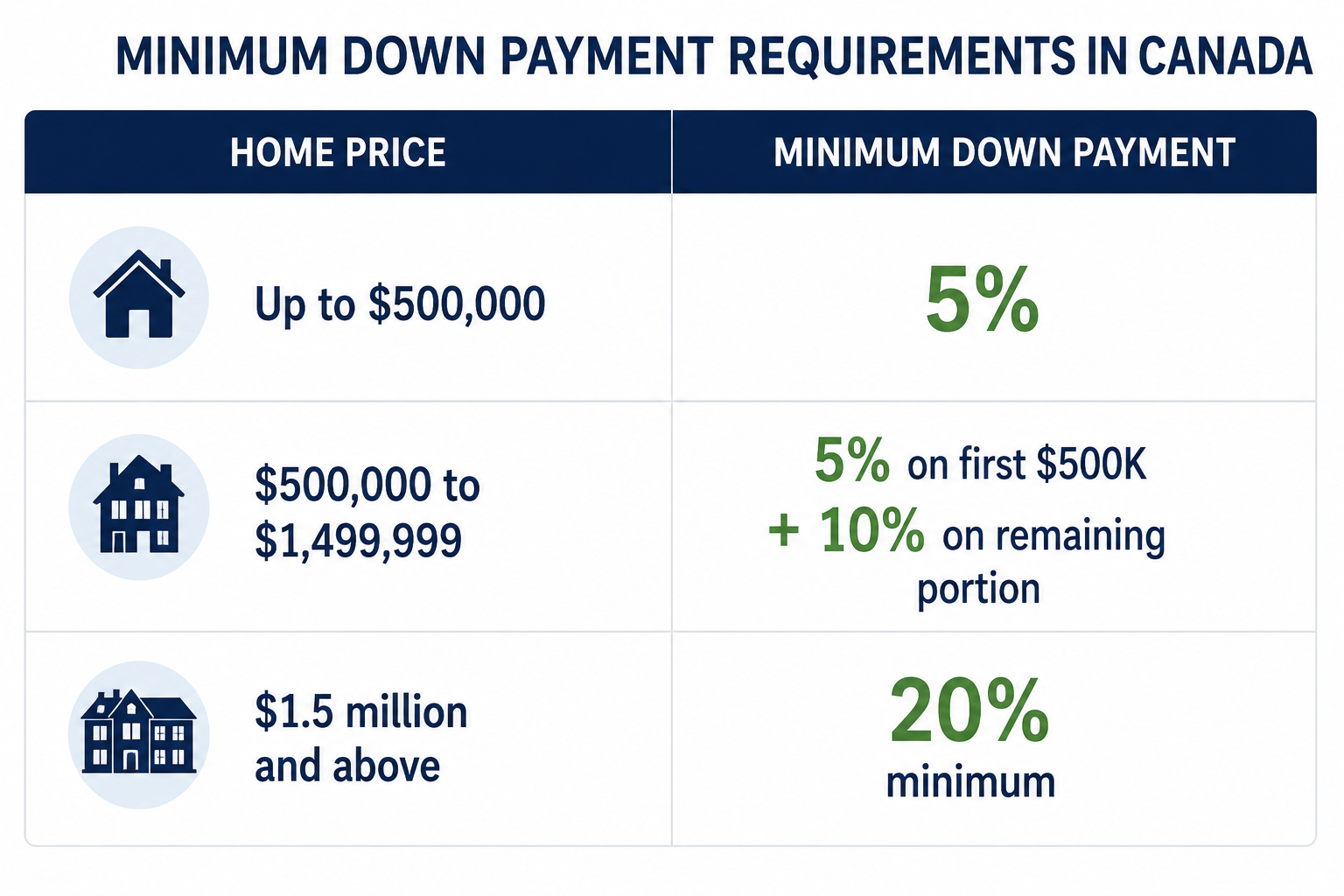
Canadian mortgage rules generally require buyers to provide a minimum down payment when purchasing residential property.

The required amount can vary depending on:

  • purchase price
  • mortgage type
  • lender requirements
  • occupancy plans
  • financing structure
  • financial qualifications

For example, insured mortgages in Canada may allow qualified buyers to purchase homes with lower down payment percentages compared to conventional financing.

However, buyers should understand that lower down payments can also affect:

  • monthly mortgage costs
  • mortgage insurance premiums
  • borrowing limits
  • overall affordability
  • long-term carrying costs

Mortgage rules and lending requirements can change over time and may vary significantly between lenders.

Buyers should always confirm current financing requirements directly with qualified mortgage professionals before making decisions.

👉 It also helps to understand the hidden costs of buying a home in Victoria BC when planning savings goals and ownership costs.

According to Canada Mortgage and Housing Corporation (CMHC), insured mortgage requirements and minimum down payment rules can vary depending on purchase price and financing structure.
👉Source:Canada Mortgage and Housing Corporation (CMHC)

Are Zero Down Mortgages Still Available in BC?

True “zero down” mortgages are much less common in Canada than they once were.

In many situations, lenders still expect buyers to contribute some form of down payment from:

  • savings
  • investments
  • gifted funds
  • approved borrowing sources

That said, some lenders may permit approved borrowed down payment structures depending on lending guidelines and buyer qualifications.

Some buyers may also explore:

  • gifted family contributions
  • down payment assistance programs
  • existing equity from another property
  • flexible savings strategies

Approval depends heavily on:

  • income stability
  • credit history
  • debt servicing ratios
  • employment history
  • overall financial profile

And honestly, what buyers qualify for on paper does not always mean ownership will feel financially comfortable month-to-month.

That is one reason many buyers are becoming more focused on:

  • long-term affordability
  • emergency savings
  • monthly budgeting
  • and ownership stability

instead of simply maximizing borrowing power.

👉 Some buyers also find it helpful to compare the full cost of owning a home in Victoria BC before deciding what monthly payment range feels manageable long term.

According to RBC Royal Bank Mortgage Resources, lender requirements, debt servicing calculations, and approval structures can vary significantly depending on buyer qualifications and financial circumstances.

What Programs May Help First-Time Buyers in BC?

Some first-time buyers in British Columbia may qualify for programs designed to support homeownership goals.

Depending on eligibility and government policies in place at the time, buyers may explore:

  • First Home Savings Account (FHSA)
  • RRSP Home Buyers’ Plan
  • Property transfer tax exemptions for eligible first-time buyers
  • Insured mortgage programs with lower minimum down payment requirements for qualified buyers

Programs, limits, and eligibility requirements can change over time and may depend on:

  • income
  • purchase price
  • residency status
  • financing structure
  • individual circumstances

Because of this, buyers should confirm current program details directly with qualified mortgage, tax, or legal professionals.

👉 Many first-time buyers also compare the down payment needed for homes in Victoria BC before deciding what price range feels realistic.

Source: Government of Canada — First-Time Home Buyer Programs

Source: Government of British Columbia — Property Transfer Tax Information

How Much Money Do Buyers Actually Need Upfront?

One thing many buyers do not initially expect is that the down payment is only part of the upfront cost conversation.

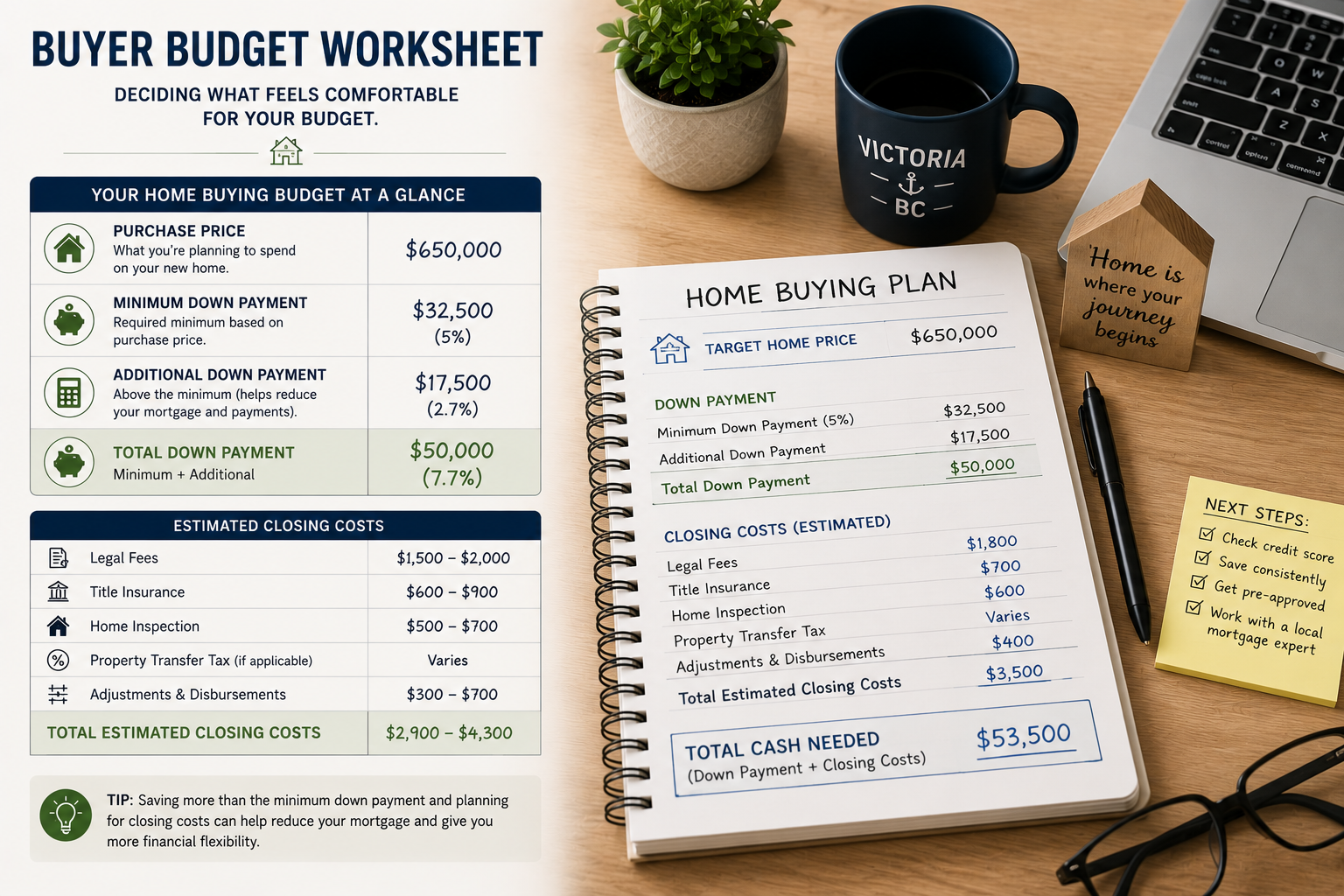
Buyers in Victoria BC may also need to budget for:

  • legal fees
  • home inspections
  • property transfer tax
  • insurance costs
  • moving expenses
  • appraisal fees
  • adjustments and closing costs

For condo purchases, buyers may also need to account for:

  • strata fees
  • move-in fees
  • insurance requirements
  • contingency planning for future expenses
  • monthly maintenance obligations

The total amount needed upfront can vary significantly depending on:

  • property type
  • financing structure
  • lender requirements
  • individual circumstances

And honestly, this is one area where buyers sometimes underestimate the true cost of ownership.

For many households, understanding the complete financial picture early often helps reduce stress later in the process.

👉 Buyers comparing ownership options may also benefit from reading the Victoria BC Condo Buying Guide before deciding what type of property fits their budget and lifestyle best.

Are Condos and Townhomes Easier Entry Points?

For some buyers, yes.

Condos and townhomes may sometimes offer comparatively lower entry price points in some Victoria BC market segments.

Because of this, some first-time buyers are increasingly considering:

  • condos
  • smaller townhomes
  • properties farther from downtown
  • shared ownership strategies in some situations

Many buyers we speak with in Greater Victoria are also prioritizing:

  • monthly affordability
  • walkability
  • lower maintenance responsibilities
  • lifestyle flexibility
  • commute balance

Over the past several years, we’ve seen many Victoria BC buyers adjust expectations around:

  • property type
  • location
  • square footage
  • ownership timelines

in order to help ownership feel more manageable financially.

And honestly, many buyers are becoming more comfortable with the idea that a first home may not necessarily be a “forever home.”

Instead, buyers are often prioritizing:

  • stability
  • manageable monthly costs
  • lifestyle fit
  • and realistic financial comfort

👉 Many buyers also compare condo vs townhouse vs detached home options in Victoria BC before deciding what ownership style fits their lifestyle and long-term goals best.

How Buyers Are Adapting to Victoria BC Housing Costs in 2026

Many buyers in Victoria BC are becoming more strategic and flexible in 2026.

Some are:

  • purchasing smaller homes
  • extending savings timelines
  • improving credit before applying
  • exploring co-buying arrangements
  • moving farther from downtown Victoria
  • choosing condos instead of detached homes
  • prioritizing monthly comfort over maximum approval amounts

Others are waiting longer while focusing on:

  • career stability
  • debt reduction
  • emergency savings
  • long-term financial confidence

And honestly, many buyers feel less pressure once they stop trying to perfectly “time” the market and instead focus on what realistically fits their life.

Many buyers we speak with in the Greater Victoria housing market are also becoming more focused on:

  • financial comfort
  • ownership stability
  • manageable monthly expenses
  • long-term lifestyle fit

rather than simply purchasing the largest property possible.

This shift is becoming increasingly common across:

  • Victoria BC
  • Westshore communities
  • Sidney
  • Saanich
  • and broader Vancouver Island markets

Is Buying Still Realistic for First-Time Buyers?

For some buyers, yes.

But the path into homeownership may look different than it did years ago.

For many first-time buyers in Victoria BC, the process now often involves:

  • longer savings timelines
  • smaller first homes
  • more detailed budgeting
  • careful mortgage planning
  • flexible location preferences

That does not necessarily mean ownership is impossible.

It simply means buyers are becoming more intentional about:

  • affordability
  • lifestyle fit
  • long-term financial comfort
  • ownership responsibilities

And in practical terms, many buyers ultimately feel more confident once they understand:

  • financing options
  • ownership costs
  • monthly affordability
  • budgeting realities
  • and long-term expectations

more clearly.

👉 Buyers relocating to the area may also benefit from reviewing the Moving to Victoria BC Guide before deciding what neighbourhoods and ownership options fit their goals best.

Why Local Victoria BC Knowledge Matters

Not all Victoria BC neighbourhoods offer the same pricing, lifestyle, or ownership experience.

For example:

  • Downtown Victoria may appeal to buyers prioritizing walkability and condo living
  • Langford and Westshore communities may offer newer inventory and comparatively more space
  • Vic West continues attracting buyers wanting newer developments and urban access
  • Sidney may appeal to downsizers and retirement-focused buyers
  • Fairfield and Oak Bay often attract buyers prioritizing neighbourhood character and long-term lifestyle appeal

Understanding those differences often helps buyers make more realistic decisions about:

  • affordability
  • commute patterns
  • monthly ownership costs
  • future flexibility
  • property type preferences
  • lifestyle priorities

👉 It also helps to explore the best neighbourhoods in Victoria BC when comparing affordability, lifestyle goals, and ownership options.

Because ultimately, many buyers are not simply choosing a home.

They are choosing how they want to live day-to-day.

How We Help Buyers Navigate the Process

This is where guidance can become especially valuable.

We help buyers:

  • understand ownership cost considerations
  • compare neighbourhoods realistically
  • explore financing conversations with trusted professionals
  • compare condos, townhomes, and detached homes
  • build a buying strategy based on comfort and long-term goals

As AI Certified Agents, we also use technology and research tools to help buyers:

  • compare neighbourhoods more efficiently
  • explore available property options across Greater Victoria and Vancouver Island
  • better understand ownership and lifestyle considerations
  • organize the process in a calmer, clearer way

The goal is never to pressure buyers into rushing decisions.

It is to help the process feel more manageable, informed, and realistic.

Over the years, we’ve also built trusted relationships with mortgage brokers, lawyers, inspectors, and other professionals throughout Greater Victoria and Vancouver Island.

So if buyers do not already have professionals in place, we are always happy to help connect them with trusted local resources.

Important Disclaimer

Please note: We are licensed real estate agents, not lawyers, accountants, or mortgage brokers. This article is intended for general educational and informational purposes only and should not be considered legal, tax, financial, mortgage, or investment advice.

Mortgage rules, lending requirements, financing programs, eligibility criteria, and property costs can change over time and may vary depending on individual circumstances and lender requirements.

Buyers should always consult qualified mortgage, legal, financial, and tax professionals regarding their specific situation before making real estate decisions.

Conclusion

Buying a Victoria BC home with absolutely no down payment may be difficult in 2026.

However, some buyers may still explore pathways toward homeownership through:

  • lower down payment mortgage options
  • savings programs
  • gifted funds
  • careful budgeting
  • more flexible property choices

For many buyers, the bigger question is not simply:
“Can I qualify?”

It is:
“Will this realistically feel financially comfortable long term?”

Many buyers feel the process becomes more manageable once they better understand:

  • financing
  • budgeting
  • ownership costs
  • long-term affordability expectations
  • and monthly financial responsibilities
  • before making decisions.

And honestly, that clarity often helps buyers move forward with much more confidence and far less stress.

Your Next Step

If you’re trying to understand what’s realistic for your budget, lifestyle, and long-term plans, we’re happy to help you explore your options without pressure.

Contact Anna Hakim and Perry Fanthorpe today at +1 250 885 7399 or visit Happy Homes Team, and let’s talk about what your next move in Victoria, BC could look like.  

👉 Start here: Victoria BC Real Estate Blog  

Happy Homes Team | eXp Realty Victoria

Homes with soul. Strategy with heart.

Frequently Asked Questions

Can you buy a house in Canada with no down payment?

In most situations, Canadian mortgage rules still require buyers to provide some form of down payment. Some buyers may explore alternative financing structures or assistance programs depending on lender requirements and individual circumstances.

Are zero down mortgages available in BC?

True zero down mortgages are less common in Canada today. Some buyers may still explore financing options involving borrowed down payments, gifted funds, or assistance programs depending on lender approval.

What is the minimum down payment in Canada?

Minimum down payment requirements can vary depending on:

  • purchase price
  • lender requirements
  • mortgage type
  • financing structure

Buyers should confirm current requirements directly with qualified mortgage professionals.

Are condos easier to afford in Victoria BC?

In some market segments, condos and townhomes may sometimes offer comparatively lower entry price points and potentially lower maintenance responsibilities compared to detached homes.

Can first-time buyers still afford homes in Victoria BC?

Some first-time buyers may still find ownership opportunities in Victoria BC depending on:

  • budget
  • financing
  • property type
  • location preferences

Many buyers are adjusting expectations around:

  • property size
  • commute distance
  • ownership timelines
  • and monthly affordability.

What programs help first-time buyers in BC?

Some buyers may qualify for programs such as:

  • the FHSA
  • RRSP Home Buyers’ Plan
  • first-time buyer tax exemptions

depending on eligibility and current program rules.

Sources

May 19, 2026

Why Victoria BC Homes Are So Expensive in 2026 | Housing Costs & Market Trends

Why Victoria BC Homes Are Expensive in 2026

Last Updated: May 2026

Quick Answer

Victoria BC homes continue to feel expensive for many buyers in 2026 because of limited housing supply in some market segments, continued migration and lifestyle demand, high construction costs, and limited land availability across Greater Victoria and Vancouver Island.

What This Means for Buyers in 2026

For many buyers, Victoria BC’s housing market in 2026 feels more balanced and less frantic compared to some previous years.

That does not necessarily mean homes feel inexpensive. Affordability remains a major challenge for many households across Greater Victoria and Vancouver Island.

At the same time, some buyers are finding they have more time to evaluate properties carefully, compare neighbourhoods, and think more strategically about long-term ownership costs and lifestyle priorities.

For many people, the goal is no longer simply getting into the market as quickly as possible. It is finding a home and ownership situation that feels financially sustainable and realistically supports the way they want to live day-to-day.

Key Takeaways

  • Victoria BC housing prices remain high due to limited land supply and strong demand
  • Detached homes in some Victoria BC neighbourhoods continue facing limited inventory
  • Some buyers are increasingly considering condos and townhomes as potentially more attainable ownership options
  • Lifestyle appeal and migration patterns may continue contributing to housing demand over time
  • Affordability depends heavily on financing, property type, and location

Many buyers searching “why homes expensive Victoria BC” are trying to understand:

  • Why affordability feels so challenging
  • Whether prices are expected to change
  • Why Victoria BC remains in high demand
  • Whether moving to Victoria BC is still realistic
  • How local buyers are adapting to ownership costs

👉 While some market segments appear more balanced compared to previous years, affordability continues to be a major concern for many buyers in 2026.

Why Victoria BC Home Prices Continue to Feel High

Greater Victoria has been one of Canada’s more expensive housing markets for years.

For many households relocating from other parts of Canada, the prices can feel surprising at first.

Especially when comparing:

  • Detached home prices
  • Monthly ownership costs
  • Down payment requirements
  • Property taxes
  • Insurance costs
  • Overall cost of living

But Victoria BC’s housing market is shaped by several unique factors that continue influencing prices in 2026.

Those include:

  • Limited land availability
  • Strong migration demand
  • Lifestyle appeal
  • Housing supply shortages
  • Construction costs
  • Long-term desirability of Vancouver Island living

And while some buyers hope prices will dramatically fall, the reality is often more nuanced.

Housing markets can change over time, but affordability pressures in Victoria BC are tied to broader long-term supply and demand dynamics rather than one single factor.

Why Is Housing Supply Limited in Victoria BC?

One major reason Victoria BC homes can continue feeling expensive for many buyers is limited housing supply in some Victoria BC market segments.

Greater Victoria is surrounded by:

  • Ocean
  • Protected land
  • Agricultural land reserves
  • Established neighbourhoods
  • Geographic development constraints

Unlike some larger Canadian cities with more outward expansion opportunities, Victoria BC has more physical limitations on where large-scale housing growth can occur.

At the same time, population growth and migration into Vancouver Island communities have continued increasing demand for housing.

This imbalance between supply and demand may place upward pressure on housing prices over time depending on market conditions and inventory levels.

Housing supply challenges can also involve:

  • Municipal approval timelines
  • Infrastructure limitations
  • Construction labour shortages
  • Rising development costs
  • Zoning considerations

And honestly, these are not issues that can necessarily be solved quickly.

Source:Government of British Columbia

Why Do So Many People Want to Live in Victoria BC?

One of the biggest reasons Victoria BC remains expensive is simple:

A lot of people genuinely want to live here.

The region continues attracting:

  • Retirees
  • Remote workers
  • Relocation buyers
  • Military families
  • Professionals
  • Students
  • Lifestyle-focused buyers

Many people are drawn to:

  • Mild climate
  • Coastal lifestyle
  • Walkability
  • Outdoor recreation
  • Access to nature
  • Vancouver Island pace of life
  • Neighbourhood character

For some buyers, Victoria BC offers a lifestyle that feels slower, calmer, and more connected compared to larger urban centres.

In practical terms, that emotional lifestyle appeal often becomes just as important as the property itself.

Many buyers relocating to Greater Victoria are not simply purchasing a house.

They are trying to build a different kind of daily life.

👉 Learn the step-by-step home buying process in Victoria BC → 

How to Buy a House in Victoria BC (2026 Step-by-Step Guide)


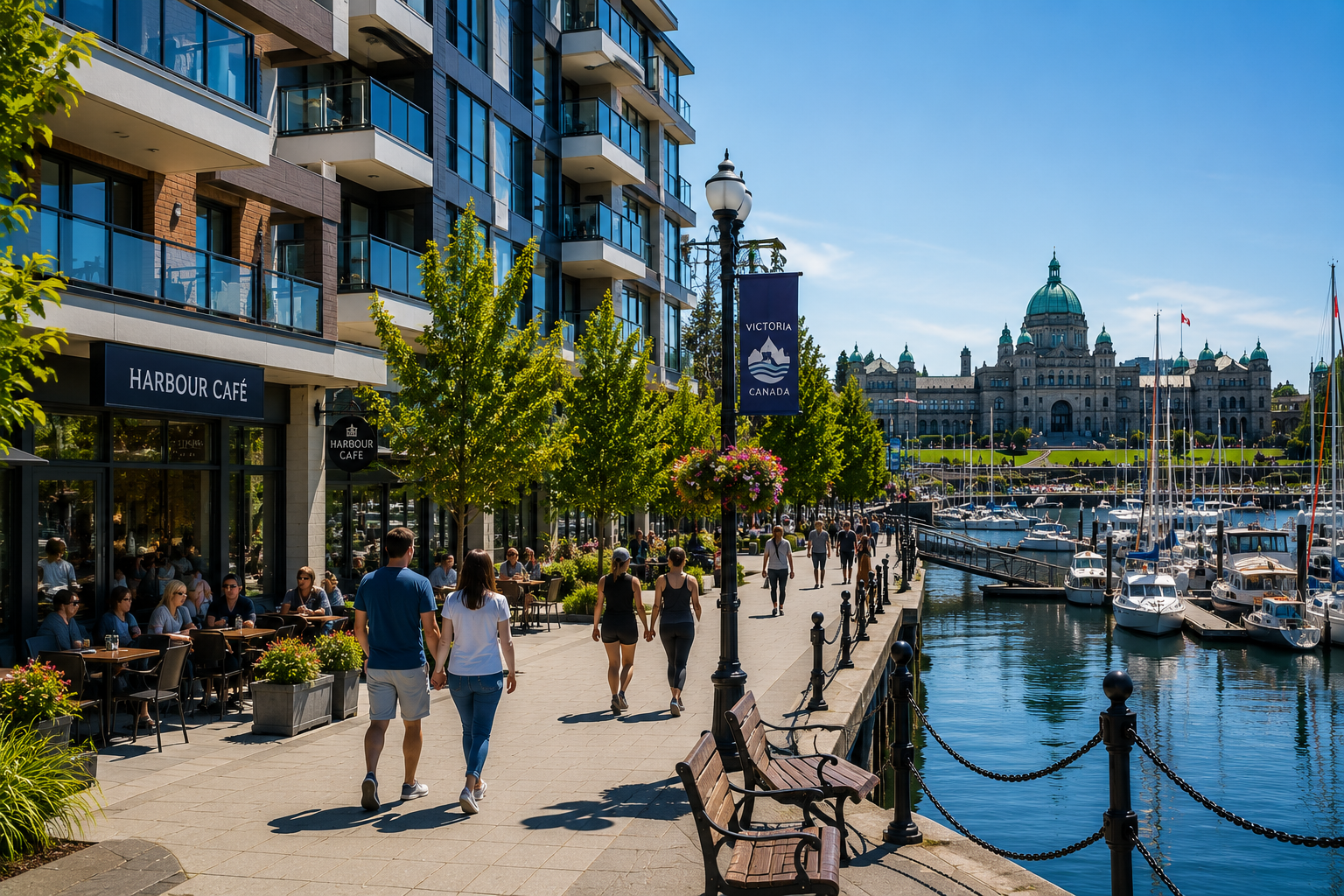
Image Suggestion: Residents enjoying Victoria BC waterfront lifestyle.
Alt Text: “Victoria BC lifestyle and waterfront living in 2026.”

Are Victoria BC Home Prices Still Increasing in 2026?

Home prices in Victoria BC continue to vary significantly depending on:

  • Property type
  • Neighbourhood
  • Inventory levels
  • Buyer demand
  • Financing conditions

Some market segments appear more balanced compared to previous peak seller-market periods, although conditions can still vary significantly depending on neighbourhood and property type.

However, certain well-priced properties in desirable neighbourhoods may still experience strong buyer demand.

At the same time, many buyers in 2026 are more cautious about:

  • Monthly affordability
  • Interest rates
  • Carrying costs
  • Insurance expenses
  • Long-term ownership comfort

Because of this, pricing sensitivity has become more noticeable in some areas of the market.

No one can predict future home prices with certainty.

Real estate values may change over time depending on broader economic conditions, housing supply, financing conditions, and government policy.

Buyers should avoid making decisions based solely on assumptions about future appreciation or market timing.

Image Suggestion: Victoria BC housing market chart and neighbourhood homes.
Alt Text: “Victoria BC housing market trends and pricing in 2026.”

How Interest Rates and Monthly Costs Affect Affordability

One thing many buyers do not initially expect is how much monthly ownership costs can affect affordability.

In 2026, many Victoria BC buyers are paying close attention to:

  • Mortgage payments
  • Interest rates
  • Property taxes
  • Insurance costs
  • Utility costs
  • Strata fees for condos and townhomes
  • Maintenance expenses

Even if home prices stabilize in some segments, higher borrowing costs can still affect overall affordability.

This is one reason many buyers are becoming more careful about:

  • Monthly budgeting
  • Mortgage pre-approval
  • Emergency savings
  • Long-term financial flexibility

Some buyers are also choosing smaller homes, condos, or townhomes to stay more comfortable with ownership costs.

Financing requirements and lending rules can vary significantly depending on lenders and individual circumstances.

Buyers should always confirm financing details directly with qualified mortgage professionals before making decisions.

👉 Learn more about the mortgage pre-approval process in Victoria BC if you want a clearer sense of budget and next steps before starting your search.

Why Are Detached Homes So Expensive in Victoria BC?

Detached homes in Victoria BC often feel especially expensive because of limited inventory and strong long-term demand.

Many buyers continue prioritizing:

  • Private outdoor space
  • Larger homes
  • Family flexibility
  • Rental suite potential
  • Work-from-home space
  • Long-term stability

At the same time, detached housing inventory may remain limited in some established neighbourhoods depending on market activity and listing supply.

In areas like:

  • Oak Bay
  • Fairfield
  • Gordon Head
  • Cadboro Bay
  • James Bay

well-maintained detached homes may still attract strong interest from buyers.

And honestly, for many local buyers, detached homes can increasingly feel financially out of reach.

That is one reason more buyers are exploring:

  • Condos
  • Townhomes
  • Smaller homes
  • Multi-generational living arrangements
  • Properties farther from downtown Victoria

Are Condos and Townhomes Becoming More Popular?

For some buyers, condos and townhomes may offer more practical ownership options in Greater Victoria depending on affordability goals, lifestyle preferences, and financing comfort.

Many first-time buyers, downsizers, relocation buyers, and move-up buyers are looking for:

  • Lower-maintenance living
  • More manageable monthly costs
  • Walkable neighbourhoods
  • Smaller ownership footprints
  • More attainable entry price points in some market segments

Townhomes and condos may not work for every buyer.

But for some households, they can offer a more realistic path into homeownership compared to detached homes.

Many buyers are also prioritizing:

  • Commute flexibility
  • Lifestyle convenience
  • Access to amenities
  • Long-term ownership comfort

Buyer priorities in Victoria BC are also becoming much more lifestyle-focused than they were several years ago.

How Buyers Are Adapting to Victoria BC Housing Prices in 2026

Many buyers in Victoria BC are becoming more cautious and strategic in 2026.

Some are:

  • Purchasing smaller homes to stay more comfortable with monthly ownership costs
  • Moving farther from downtown for more space
  • Choosing condos or townhomes instead of detached homes
  • Prioritizing walkability over square footage
  • Looking for long-term homes instead of short-term investments

Others are simply taking more time before making decisions.

And honestly, that slower pace is helping many buyers feel more confident about the choices they ultimately make.

Many buyers we speak with in the Greater Victoria housing market are also less focused on trying to “beat the market” and more focused on finding monthly stability, financial comfort, and a home that realistically supports their day-to-day living.

Over the past several years, we’ve seen many Victoria BC buyers adjust their expectations around space, commute patterns, and property type as affordability continues evolving across the region.

Is Moving to Victoria BC Still Worth It in 2026?

For many people, yes.

Despite affordability concerns, Victoria BC continues attracting buyers because of:

  • Climate
  • Lifestyle
  • Walkability
  • Outdoor recreation
  • Access to ocean and nature
  • Slower pace of life
  • Strong sense of community

But whether moving to Victoria BC makes sense depends heavily on:

  • Budget
  • Employment situation
  • Housing expectations
  • Long-term plans
  • Lifestyle priorities

For some buyers, the lifestyle benefits feel worth the higher ownership costs.

For others, affordability challenges may lead them to consider:

  • Smaller properties
  • Alternative Vancouver Island communities
  • Renting longer
  • Different ownership timelines

And honestly, there is no universally right answer.

The important thing is making decisions that realistically align with your financial comfort level and long-term goals.

👉 Explore the best areas to live in Victoria BC

Best Areas to Live in Victoria BC (2026 Buyer Guide)

Which Victoria BC Neighbourhoods Are Buyers Prioritizing in 2026?

Different neighbourhoods across Greater Victoria continue attracting different types of buyers.

For example:

  • Downtown Victoria may appeal to buyers prioritizing walkability and urban living
  • Fairfield often attracts buyers looking for neighbourhood character and proximity to downtown
  • Oak Bay continues attracting buyers looking for established homes and coastal lifestyle appeal
  • Vic West may appeal to buyers wanting newer developments and waterfront access
  • Langford and Westshore communities may offer newer inventory and more space for some households

Understanding neighbourhood differences often helps buyers make more realistic decisions about affordability, lifestyle, commute patterns, and long-term ownership comfort.

Because ultimately, many buyers are not simply choosing a property.

They are choosing how they want to live day-to-day.

How We Help Buyers Navigate Victoria BC Housing Costs

This is where guidance can become especially valuable.

We help buyers:

  • Compare neighbourhoods realistically
  • Understand ownership cost considerations
  • Compare property types
  • Organize priorities and timelines
  • Connect with trusted mortgage and legal professionals
  • Understand local market conditions more clearly

As AI Certified Agents, we also use technology and research tools to help buyers:

  • Review publicly available market information
  • Compare neighbourhoods more efficiently
  • Explore available property options across Victoria BC and Vancouver Island
  • Better understand ownership and lifestyle considerations

The goal is never to pressure buyers into rushing decisions.

It is to help the process feel calmer, clearer, and easier to navigate.

Important Disclaimer

Please note: We are licensed real estate agents, not lawyers, accountants, or mortgage brokers. This article is intended for general educational and informational purposes only and should not be considered legal, tax, financial, mortgage, or investment advice.

Housing market conditions, financing requirements, interest rates, regulations, and property values can change over time and may vary depending on individual circumstances and market conditions.

Buyers should always consult qualified legal, financial, tax, and mortgage professionals regarding their specific situation before making real estate decisions.

Conclusion

Victoria BC home prices remain high in 2026 because of a combination of:

  • Limited housing supply
  • Strong demand
  • Lifestyle appeal
  • Land constraints
  • Long-term migration into Vancouver Island communities

At the same time, buyers are becoming more thoughtful about:

  • Affordability
  • Monthly ownership costs
  • Lifestyle priorities
  • Long-term financial comfort

For many people, the appeal of Victoria BC extends beyond housing itself.

It is about lifestyle, community, outdoor living, and building a life that feels sustainable long term.

And once buyers stop trying to perfectly predict the market and start focusing on long-term fit, the process often feels much clearer and less overwhelming.

Your Next Step

If you are thinking about moving to Victoria BC or trying to understand local housing costs more clearly, we are happy to help you explore your options.

Contact Anna Hakim and Perry Fanthorpe today at +1 250 885 7399 or visit Happy Homes Team, and let’s talk about what your next move in Victoria, BC could look like. 

If you’re trying to understand what’s realistic for your budget, lifestyle, and long-term plans, we’re happy to help you explore your options without pressure.

👉 Start here: Victoria BC Real Estate Blog   

Happy Homes Team | eXp Realty Victoria

Homes with soul. Strategy with heart.

Frequently Asked Questions

Why are homes so expensive in Victoria BC?

Victoria BC home prices can feel high for many buyers because of limited housing supply in some market segments, continued buyer demand, lifestyle appeal, land constraints, and population growth across Vancouver Island.

Is Victoria BC more expensive than other Canadian cities?

Victoria BC remains one of Canada’s more expensive housing markets, although affordability can vary significantly depending on neighbourhood, property type, and ownership goals.

Are Victoria BC home prices expected to drop?

No one can predict future housing prices with certainty. Market conditions may change over time depending on supply, demand, financing conditions, and broader economic factors.

Why do so many people move to Victoria BC?

Many people are drawn to Victoria BC because of its mild climate, coastal lifestyle, outdoor recreation, walkability, and Vancouver Island pace of life.

Why is Victoria BC real estate still in demand?

Victoria BC continues attracting many buyers because of its mild climate, coastal lifestyle, walkability, outdoor recreation, and lifestyle appeal across Vancouver Island.

Are condos more affordable than detached homes in Victoria BC?

In some market segments, condos and townhomes may offer comparatively lower entry price points and potentially lower maintenance responsibilities compared to detached homes, depending on the property and strata structure.

Sources

May 16, 2026

Is 2026 a Good Time to Buy in Victoria BC? Housing Market Guide

Is 2026 a Good Time to Buy in Victoria, BC?

Last Updated: May 2026

Quick Answer

Yes, for some buyers, 2026 may offer a more balanced opportunity to buy in Victoria BC compared to the intense seller-market conditions of previous years.

Some buyers are experiencing:

    • More inventory choice
    • Slightly more negotiating flexibility
    • More time to evaluate properties

But the right timing still depends heavily on affordability, financing comfort, lifestyle goals, and long-term plans.

Ultimately, the right timing depends less on headlines and more on your financial comfort, lifestyle priorities, and long-term plans.

👉Many buyers searching “is it good time to buy Victoria BC” are really trying to answer a more personal question:

“Does buying now realistically make sense for my life?”

2026 Victoria BC Housing Market Snapshot

Victoria BC’s housing market in 2026 continues to feel more balanced than the intense seller-market conditions experienced during parts of 2021 and 2022.

Buyers across Greater Victoria and Vancouver Island are paying much closer attention to:

    • Mortgage payments
    • Interest rates
    • Ownership costs
    • Lifestyle flexibility
    • Commute times
    • Long-term affordability

At the same time, many sellers are adjusting expectations as buyers become more cautious and selective.

In neighbourhoods like Fairfield, James Bay, Vic West, Oak Bay, Langford, Gordon Head, and Sidney, buyers are often balancing:

    • Lifestyle goals
    • Budget realities
    • Space needs
    • Walkability
    • Future flexibility

And honestly, that slower and more thoughtful approach is not necessarily a bad thing.

Many buyers relocating to Greater Victoria or Vancouver Island are taking more time to evaluate lifestyle fit, ownership costs, and long-term comfort before making a move.

They are also less focused on trying to “beat the market” and more focused on finding stability, monthly comfort, and a home that realistically fits how they want to live long term.

Because financing conditions, interest rates, and housing regulations can evolve over time, buyers should always confirm current information with qualified professionals before making decisions.

What We’re Seeing Locally in Victoria BC

Some buyers in Victoria BC are finding that certain condo and townhome segments offer more flexibility than they did a few years ago, particularly when listings are priced aggressively or have been sitting longer on the market.

At the same time, well-presented homes in desirable neighbourhoods and school catchments can still attract strong interest and occasional competition.

We are also seeing many buyers place greater importance on:

    • Walkability
    • Flexible work-from-home layouts
    • Lower-maintenance living
    • Long-term lifestyle fit over short-term speculation

Should You Buy Now or Wait in Victoria BC?

This is one of the biggest questions buyers are asking right now.

And the honest answer is that nobody can predict the future housing market with certainty.

Real estate markets are influenced by many factors, including:

    • Interest rates
    • Employment conditions
    • Housing supply
    • Consumer confidence
    • Government policy
    • Population growth
    • Broader economic conditions

For some buyers, purchasing now may make sense because:

    • They are financially prepared
    • They plan to stay long term
    • They want stability instead of renting
    • Some buyers may feel current inventory offers more options compared to previous periods
    • They find a home that realistically fits their needs

For others, waiting may feel more appropriate depending on:

    • Employment stability
    • Down payment readiness
    • Comfort with ownership costs
    • Future relocation plans
    • Financing qualification

This is one reason many buyers benefit from focusing less on perfectly timing the market and more on whether ownership realistically supports their long-term goals.

Are Victoria BC Home Prices Going Up or Down in 2026?

Home prices in Victoria BC continue to vary significantly depending on:

    • Property type
    • Neighbourhood
    • Inventory levels
    • Financing conditions
    • Buyer demand

Some market segments have experienced more price stability compared to the rapid price growth seen during earlier pandemic years, although market conditions can still vary significantly between neighbourhoods and property types.

At the same time, certain well-priced properties in desirable areas may still attract strong competition.

Buyers in 2026 are also paying closer attention to:

    • Monthly carrying costs
    • Insurance expenses
    • Mortgage qualification
    • Long-term affordability
    • Property condition

That means pricing sensitivity has become more noticeable in some parts of the market.

However, no one can guarantee future pricing direction or appreciation.

Real estate values can change over time and may be affected by broader economic, financial, and policy conditions.

Because of this, buyers should avoid making decisions based solely on assumptions about future appreciation or short-term market timing.

Source: Realtor.ca

Are Buyers Getting More Negotiating Power in 2026?

In some areas of the Victoria BC market, some buyers may experience slightly more negotiating flexibility compared to previous years, particularly in certain market segments.

Some buyers are reporting:

    • More time to evaluate properties
    • Fewer competing offers in certain segments
    • Greater flexibility around conditions
    • More inventory choice in some neighbourhoods

However, competitiveness can still vary significantly depending on:

    • Price range
    • Property condition
    • Location
    • Property type
    • Market demand

Some highly desirable homes may still receive strong competition.

This is another reason buyers benefit from understanding local market conditions within their own price range rather than relying entirely on broad national headlines.

How Interest Rates Are Affecting Victoria BC Home Buyers in 2026

Interest rates continue to play a major role in buyer decision-making throughout 2026.

Even small changes in rates can affect:

    • Monthly mortgage payments
    • Borrowing power
    • Affordability calculations
    • Overall ownership comfort

Because of this, many buyers are paying closer attention to:

    • Mortgage pre-approval
    • Monthly budgeting
    • Emergency savings
    • Total ownership costs
    • Long-term financial flexibility

Some buyers are also choosing to purchase below their maximum approval amount to create more breathing room in monthly finances.

Financing programs and lending requirements can vary significantly between lenders and individual circumstances.

Buyers should always confirm financing details directly with qualified mortgage professionals before relying on any lending assumptions.

What Buyers Are Prioritizing in 2026

One of the biggest shifts happening in Victoria BC right now is that buyers are becoming more lifestyle-focused.

Instead of simply asking:

“Can we buy?”

Many buyers are asking:

“Does this home realistically support the kind of life we want?”

That often includes practical considerations like:

    • Walkability
    • Parking
    • Home office space
    • Outdoor access
    • Commute patterns
    • Maintenance responsibilities
    • Storage space
    • Long-term flexibility

For some buyers, a smaller home in a walkable neighbourhood feels more valuable.

For others, additional space or future family flexibility may matter more.

And honestly, those lifestyle considerations often become just as important as market timing itself.

What Type of Property Makes the Most Sense in Victoria BC?

Many first-time buyers, relocation buyers, downsizers, condo buyers, and move-up buyers are also weighing which property type best supports their goals in the current Victoria BC housing market.

Condos May Appeal To Buyers Looking For:

    • Lower-maintenance living
    • Walkability
    • Central locations
    • Lower entry price points in some market segments

Townhomes May Appeal To Buyers Looking For:

    • More interior space
    • Some outdoor space
    • Family-friendly layouts
    • Lower-maintenance ownership compared to detached homes

Detached Homes May Appeal To Buyers Looking For:

    • More privacy
    • Larger yards
    • Renovation flexibility
    • Long-term family expansion space

None of these ownership options are automatically better.

The right fit depends heavily on lifestyle priorities, maintenance preferences, ownership costs, and long-term goals.

What Buyers Are Actually Doing in Victoria BC Right Now

Many buyers in Victoria BC are becoming more cautious and strategic in 2026.

Some are:

    • Purchasing smaller homes to stay more comfortable with monthly ownership costs
    • Choosing condos or townhomes instead of detached homes
    • Prioritizing walkability over square footage
    • Moving farther from downtown for more space
    • Looking for long-term homes instead of short-term investments

Others are simply taking more time before making decisions.

And honestly, that slower pace is helping many buyers feel more confident about the choices they ultimately make.

What Buyers Should Be Careful About in 2026

One thing many buyers are trying to avoid right now is becoming overly influenced by fear or urgency.

During changing markets, buyers can sometimes feel pressure from:

    • Interest rate headlines
    • Social media predictions
    • Market speculation
    • Fear of missing out
    • Fear of buying at the wrong time

But making rushed decisions based purely on headlines does not always lead to the strongest long-term outcomes.

At the same time, waiting indefinitely for “perfect” market conditions may also create challenges if personal goals or housing needs continue changing.

This is why many buyers benefit from focusing on:

    • Financial comfort
    • Lifestyle fit
    • Practical affordability
    • Long-term stability
    • Personal readiness

Rather than trying to predict short-term market movements with certainty.

A Quick Reality Check About Timing the Victoria BC Housing Market

One thing many buyers eventually realize is that market timing often looks much clearer in hindsight than it does in real time.

And honestly, most people do not buy homes based purely on economics.

They buy because:

    • Their family situation changes
    • They relocate for work
    • They want stability
    • They need more space
    • They are tired of renting
    • They want a different lifestyle

That does not mean market conditions are unimportant.

It simply means personal timing often matters just as much as market timing.

For many buyers, the process feels much less stressful once they stop trying to perfectly predict the future and start focusing on what realistically works for their life.

If you are unsure whether buying now realistically fits your budget or long-term plans, speaking with local professionals early can often bring much more clarity to the process.

Which Victoria BC Neighbourhoods Are Buyers Prioritizing in 2026?

Not all Victoria BC neighbourhoods behave the same way during changing market conditions.

For example:

    • Downtown Victoria may appeal to buyers prioritizing walkability and urban living
    • Oak Bay often attracts buyers looking for established neighbourhood character
    • Vic West continues attracting buyers wanting newer developments and waterfront access
    • Gordon Head may appeal to buyers prioritizing family space and schools
    • Langford and Westshore communities may offer newer inventory and more space for some buyers

Understanding those neighbourhood differences can help buyers make more informed and realistic decisions.

Because ultimately, many buyers are not simply choosing a property.

They are choosing how they want to live day-to-day.

How We Help Buyers Navigate the Market

This is where guidance can become especially valuable.

We help buyers:

    • Compare neighbourhoods realistically
    • Understand ownership cost considerations
    • Organize priorities and timelines
    • Compare property types
    • Connect with trusted mortgage and legal professionals
    • Understand local market conditions more clearly

As AI Certified Agents, we also use technology and research tools to help buyers:

    • Review publicly available market information
    • Compare neighbourhoods more efficiently
    • Explore available property options across Victoria BC and Vancouver Island
    • Better understand lifestyle and ownership considerations

We believe technology should support better human decisions, not replace them.

Important Disclaimer

Please note: We are licensed real estate agents, not lawyers, accountants, or mortgage brokers. This article is intended for general educational and informational purposes only and should not be considered legal, tax, financial, mortgage, or investment advice.

Housing market conditions, financing requirements, interest rates, regulations, and property values can change over time and may vary depending on individual circumstances and market conditions.

Buyers should always consult qualified legal, financial, tax, and mortgage professionals regarding their specific situation before making real estate decisions.

Conclusion

So, is 2026 a good time to buy in Victoria BC?

For some buyers, 2026 may offer a more balanced and thoughtful buying environment compared to the fast-moving markets of previous years.

Especially if:

    • They are financially prepared
    • They plan to stay long term
    • They find a property that realistically fits their lifestyle and budget
    • They understand the ownership costs involved

For others, waiting may still make more sense depending on personal circumstances and financial readiness.

The most important thing is usually not trying to perfectly predict the market.

It is making decisions that realistically align with your goals, comfort level, and lifestyle priorities.

Your Next Step

If you are thinking about buying property in Victoria BC and want help understanding current market conditions, ownership costs, neighbourhood fit, or financing considerations, we are happy to help you think it through.

Contact Anna Hakim and Perry Fanthorpe today at +1 250 885 7399 or visit Happy Homes Team, and let’s talk about what your next move in Victoria, BC could look like.   

If you are starting to think about whether buying now realistically fits your lifestyle, budget, and long-term plans, we are here to help you explore the options thoughtfully and at your own pace.

👉 Start here: Victoria BC Real Estate Blog  


Happy Homes Team | eXp Realty Victoria

Homes with soul. Strategy with heart.

Frequently Asked Questions

Is 2026 a buyer’s market in Victoria BC?

Some segments of the Victoria BC housing market may feel more balanced compared to previous years, while others still remain competitive. Market conditions can vary significantly depending on property type, neighbourhood, and price range.

Should I wait for Victoria BC home prices to drop before buying?

No one can predict future housing prices with certainty. Most buyers benefit more from focusing on affordability, financing readiness, and long-term lifestyle goals rather than trying to perfectly time the market.

Are interest rates expected to change in 2026?

Interest rates may continue changing throughout 2026 depending on broader economic conditions and Bank of Canada policy decisions. Buyers should confirm current mortgage rates and financing details directly with qualified mortgage professionals.

What should buyers focus on most in 2026?

Many buyers are focusing more heavily on long-term affordability, lifestyle fit, ownership costs, financial comfort, and neighbourhood suitability rather than trying to perfectly predict short-term market timing.

Sources

May 15, 2026

Buying a Condo in Victoria BC (2026 Guide): Strata Fees, Rules, Costs & What Buyers Should Know

Buying a Condo in Victoria BC (2026 Guide): Strata Fees, Rules, Costs & What Buyers Should Know

Last Updated: May 2026

Quick Answer

Buying a condo in Victoria BC may offer lower-maintenance living, walkability, and a comparatively lower entry price point than some detached homes in certain Victoria BC market segments.

But buyers should also understand:

    • Strata fees
    • Building rules and bylaws
    • Ownership responsibilities
    • Long-term ownership costs
    • Lifestyle fit
    • Building maintenance planning

👉 Many buyers searching “buying condo Victoria BC” are trying to understand whether condo living actually supports the kind of lifestyle they want long term.

2026 Condo Market Update in Victoria BC

Condo demand in Victoria BC remains active in 2026, especially among:

    • First-time buyers
    • Downsizers
    • Relocation buyers
    • Buyers prioritizing walkability
    • Buyers looking for lower-maintenance living

Across Greater Victoria and Vancouver Island, condo buyers are also paying closer attention to:

    • Monthly affordability
    • Strata fee increases
    • Depreciation reports
    • Insurance costs
    • Rental and pet bylaws
    • Long-term ownership flexibility

In neighbourhoods like Downtown Victoria, Vic West, James Bay, Fairfield, and Sidney, buyers are often balancing lifestyle convenience with long-term ownership considerations.

Because of this, many buyers are becoming more thoughtful about choosing not only the right unit, but also the right building and neighbourhood.

Because strata legislation, insurance requirements, financing realities, and municipal regulations can evolve over time, buyers should always confirm current rules, costs, and obligations during their due diligence process.

Thinking About Buying a Condo in Victoria BC?

Here is what many buyers do not fully realize until they are already deep into the process.

Buying a condo is not only about the individual unit itself.

You are also buying into:

    • A building
    • A shared ownership structure
    • A strata corporation
    • Long-term maintenance planning
    • Shared financial responsibilities
    • A particular lifestyle environmen

And honestly, that is where many of the most important decisions happen.

Many buyers searching “condo guide Victoria BC” are trying to understand:

    • Whether condo living fits their lifestyle
    • What strata fees actually cover
    • How building bylaws work
    • Whether condo ownership suits their long-term goals
    • How condos compare to townhomes or detached homes

We are Anna Hakim and Perry Fanthorpe from the Happy Homes Team with eXp Realty Victoria, helping buyers navigate the Victoria BC real estate market with calm, clear, and practical guidance.

And for many condo buyers, especially first-time buyers, the process feels much easier once someone explains how condo ownership actually works in real life.

Because condo living can be an excellent fit for some buyers.

But it is still important to understand both the advantages and the trade-offs before making decisions.

This guide is based on general condo buying conditions in Victoria BC and surrounding Vancouver Island communities as of 2026.

What Does Condo Ownership Actually Mean?

Condo ownership in British Columbia generally means you own your individual strata lot while also sharing ownership of common property areas within the building.

That shared ownership structure is managed through a strata corporation.

Depending on the building, the strata corporation may be responsible for things like:

    • Common area maintenance
    • Landscaping
    • Certain building insurance expenses for common property areas
    • Shared amenities
    • Exterior building repairs
    • Building bylaws and rules

This is one reason some buyers find condo ownership more manageable from a day-to-day maintenance perspective.

However, condo ownership also means owners typically share financial responsibility for certain building-related expenses.

Insurance responsibilities can vary significantly between strata corporations and individual owners, so buyers should review insurance documents carefully and obtain advice from qualified insurance professionals when needed.

Source: Government of British Columbia

What Are Strata Fees in Victoria BC?

Strata fees are monthly payments owners contribute toward shared building expenses and maintenance.

In Victoria BC, condo buyers often compare strata fees alongside mortgage payments and other monthly ownership costs when evaluating affordability.

Strata fees can vary depending on:

    • Building age
    • Amenities
    • Insurance costs
    • Long-term maintenance planning
    • Building size
    • Concierge or management services

Strata Fees May Help Cover:

    • Building maintenance
    • Landscaping
    • Water
    • Garbage and recycling
    • Certain common area insurance expenses
    • Amenity upkeep
    • Contributions toward contingency reserve funds

Some buildings with pools, gyms, concierge services, or extensive amenities may have higher monthly strata fees.

And while some buyers initially view strata fees negatively, many later realize those fees may offset some maintenance responsibilities they would otherwise manage independently in a detached home.

Coverage, responsibilities, and costs can vary significantly between buildings, so buyers should review strata documents carefully to understand what is included.

It can also help to compare condo ownership costs against detached homes or townhomes when evaluating overall lifestyle fit.

What Condo Rules Should Buyers Pay Attention To?

Every condo building has its own bylaws and rules, and those rules can significantly affect day-to-day lifestyle.

Buyers should carefully review:

    • Pet bylaws
    • Rental-related bylaws
    • Renovation rules
    • Age restrictions
    • Parking rules
    • Storage rules
    • Noise policies
    • Move-in or move-out procedures

Short-term rental rules can involve a combination of provincial legislation, municipal bylaws, strata bylaws, and building-specific restrictions.

Because short-term rental rules and strata legislation continue to evolve in British Columbia, buyers should confirm current policies and legal requirements before purchasing.

Some buildings may still have bylaws or occupancy-related rules that affect rental use, depending on current legislation and building-specific policies.

For example:

    • Some buildings may allow pets more freely
    • Others may limit the number or type of pets
    • Some buildings may be more investor-oriented
    • Others may focus more heavily on owner occupancy

This is one reason reviewing strata documents carefully during due diligence matters so much.

Because the right condo is not only about square footage.

It is also about whether the building realistically supports how you want to live.

Buyers may also benefit from obtaining independent legal or professional advice when reviewing important strata bylaws, disclosure materials, and building documents.

Quick Condo Buying Checklist for Victoria BC Buyers

    • Some buildings may allow pets more freely
    • Understand monthly strata fees
    • Review available depreciation reports
    • Review pet and rental-related bylaws
    • Review available information regarding past repairs and contingency reserve funding
    • Compare condo versus house lifestyle fit
    • Review parking and storage arrangements
    • Confirm insurance considerations

For many buyers, these few steps create much more clarity early in the process and help reduce surprises later.

Pros of Buying a Condo in Victoria BC

For many buyers, condo ownership offers meaningful lifestyle advantages.

Lower-Maintenance Living

Many condo owners appreciate having fewer exterior maintenance responsibilities.

That can sometimes mean:

    • Less yard work
    • Fewer exterior maintenance obligations
    • Simpler day-to-day upkeep

For busy professionals, downsizers, or relocation buyers, that simplicity can feel valuable.

More Walkable Locations

Condos are often located closer to:

    • Downtown Victoria
    • James Bay
    • Fairfield
    • Vic West
    • Restaurants and cafés
    • Inner Harbour amenities

That can create:

    • Shorter commutes
    • More walkability
    • Easier access to services
    • Greater lifestyle flexibility

Comparatively Lower Entry Price Points

For some first-time buyers in Victoria BC, condos may provide a comparatively lower entry price point than some detached homes in certain market segments.

However, affordability depends heavily on:

    • Monthly ownership costs
    • Financing qualification
    • Strata fees
    • Building condition
    • Individual financial circumstances

Potential Trade-Offs Condo Buyers Should Understand

Condo ownership is not necessarily the right fit for every buyer.

And understanding the trade-offs early often leads to better long-term decisions.

Less Privacy and More Shared Spaces

Condo living often involves:

    • Shared walls
    • Shared amenities
    • Shared building decisions
    • Shared maintenance responsibilities

For some buyers, this feels convenient.

For others, detached living may feel more comfortable.

Monthly Strata Fees

Even though strata fees may help support ongoing building maintenance, they still affect monthly ownership costs.

And in some buildings, fees may increase over time depending on maintenance needs, insurance realities, or long-term repair planning.

Management Quality and Building Planning Matter

Management quality and long-term maintenance planning can significantly affect owner experience within a strata property.

Buyers often pay close attention to:

    • Building maintenance history
    • Financial health of the strata corporation
    • Depreciation reports
    • Insurance considerations
    • Meeting minutes
    • Contingency reserve funding

Future repair costs and special assessments are not always predictable, which is why reviewing available building information carefully can be important before purchasing.

This does not necessarily mean condo ownership is unsuitable.

It simply highlights why reviewing building information carefully matters.

Buyers may benefit from obtaining independent legal or professional advice when reviewing important strata documents, insurance information, depreciation reports, and disclosure materials.

Condo vs House in Victoria BC

Many buyers comparing condos versus houses in Victoria BC are really deciding how much maintenance, privacy, flexibility, and lifestyle convenience they want long term.

Condos Often Appeal To Buyers Looking For:

    • Lower-maintenance living
    • Walkability
    • More central locations
    • Simplified exterior maintenance responsibilities

Detached Homes Often Appeal To Buyers Looking For:

    • More privacy
    • Larger outdoor space
    • Greater renovation flexibility
    • Long-term family expansion space

Neither option is automatically better.

The goal is understanding which ownership structure feels most aligned with your lifestyle, priorities, and long-term plans.

What Condo Buyers Often Overlook in Victoria BC

One thing many buyers overlook is that condo ownership is closely tied to the overall health of the building itself.

That may include:

    • Financial health of the strata corporation
    • Insurance history
    • Building maintenance planning
    • Depreciation reports
    • Potential future repair considerations

A beautifully renovated unit inside a poorly maintained or poorly planned building can still create stress later.

This does not necessarily mean condo ownership is unsuitable.

It simply means buyers benefit from looking at the full picture before making decisions.

Based on our experience helping condo buyers across Victoria BC and Vancouver Island, this is often the step that creates the most long-term clarity.

A Quick Reality Check for Condo Buyers

One thing many first-time condo buyers do not initially expect is how important the building itself becomes after moving in.

Sometimes buyers become so focused on finishes or staging that they overlook:

    • Financial health of the strata corporation
    • Insurance realities
    • Upcoming repair planning
    • Bylaw restrictions
    • Noise levels
    • Parking limitations
    • Storage availability
    • Overall building culture

And honestly, these factors can sometimes shape day-to-day lifestyle more than the unit finishes themselves.

Buyers are also paying closer attention to practical day-to-day lifestyle factors like noise levels, work-from-home suitability, EV charging availability, guest parking, storage space, package delivery security, and overall building culture.

And honestly, these details can sometimes affect long-term satisfaction just as much as the unit itself.

For many condo owners, the lived experience of the building becomes a major part of daily life after moving in.

That does not necessarily make condo ownership problematic.

It simply means the strongest condo decisions usually involve looking beyond the unit itself.

And once buyers understand what to review, the process often feels much more manageable.

Why Local Victoria BC Knowledge Matters

Not all condo lifestyles in Victoria BC feel the same.

Neighbourhood differences can significantly shape your ownership experience.

For example:

    • Downtown Victoria may appeal to buyers prioritizing walkability and urban living
    • James Bay often attracts buyers looking for a quieter community close to downtown
    • Fairfield may appeal to buyers wanting a more residential atmosphere
    • Vic West continues attracting buyers looking for newer developments and waterfront access
    • Langford and Westshore communities may offer newer condo inventory and more interior space

Understanding those lifestyle differences early often helps buyers feel more confident about where they ultimately choose to live.

👉 It also helps to explore the best areas to live in Victoria BC when comparing neighborhoods and lifestyle priorities.

How We Help Condo Buyers Navigate the Process

This is where guidance becomes especially valuable.

We help buyers:

    • Compare condo buildings realistically
    • Organize and review available strata information alongside qualified professionals when appropriate
    • Compare neighbourhoods based on lifestyle goals
    • Understand ownership cost considerations more clearly
    • Organize search priorities, timelines, and ownership considerations

As AI Certified Agents, we also use technology and research tools to help buyers:

    • Compare neighbourhoods more efficiently
    • Compare condo options across Victoria BC and Vancouver Island more clearly
    • Review publicly available market information
    • Understand long-term lifestyle fit more realistically

The goal is never to overwhelm buyers with information.

It is to help the process feel calmer, clearer, and easier to navigate.

Important Disclaimer

Please note: We are licensed real estate agents, not lawyers, accountants, mortgage brokers, insurance advisors, or strata professionals. This article is intended for general educational and informational purposes only and should not be considered legal, financial, tax, mortgage, insurance, investment, or strata advice.

Rules, bylaws, financing requirements, ownership costs, insurance considerations, municipal regulations, and strata legislation can change over time and may vary depending on the building and individual circumstances.

Buyers should always consult qualified legal, financial, mortgage, insurance, and strata professionals regarding their specific situation before making real estate decisions.

Conclusion

Buying a condo in Victoria BC can be an excellent option for buyers looking for walkability, lower-maintenance living, and a more simplified ownership structure.

But the strongest condo decisions usually happen when buyers fully understand:

    • The building
    • The strata corporation
    • Long-term ownership costs
    • Lifestyle fit
    • Building maintenance planning
    • Insurance and bylaw considerations

👉 For many buyers in 2026, condo ownership becomes less about finding the perfect unit and more about finding the right overall fit for how they actually want to live.

And once buyers understand what questions to ask and what details matter most, the process often feels far more manageable.

Your Next Step

Contact Anna Hakim and Perry Fanthorpe today at +1 250 885 7399 or visit Happy Homes Team, and let’s talk about what your next move in Victoria, BC could look like.   

👉 It also helps to review the full process of buying a home in Victoria BC step-by-step before starting your condo search.

If you’re starting to think about what kind of lifestyle you want your next home to support, we’re here to talk it through.

👉 Start here: Victoria BC Real Estate Blog  

Happy Homes Team | eXp Realty Victoria

Homes with soul. Strategy with heart.

Frequently Asked Questions

What are strata fees in Victoria BC?

Strata fees are monthly payments owners contribute toward shared building expenses such as maintenance, amenities, and certain common property costs. Coverage and responsibilities can vary significantly between buildings.

Are condos a good long-term option in Victoria BC?

Condos may suit buyers looking for lower-maintenance living, walkability, or more accessible ownership options. Whether condo ownership is the right fit depends on individual lifestyle goals, ownership costs, building quality, financing considerations, and personal circumstances.

What should condo buyers review before purchasing?

Buyers should carefully review strata documents, bylaws, depreciation reports, insurance information, meeting minutes, parking arrangements, storage arrangements, and disclosure materials during due diligence.

Are condo fees included in mortgage payments?

No. Strata fees are generally separate monthly ownership costs and should be considered alongside mortgage payments, property taxes, insurance costs, and other expenses when evaluating affordability.

Is living in a condo better than owning a house?

It depends on lifestyle preferences and ownership goals. Condos often appeal to buyers looking for walkability and lower-maintenance living, while detached homes may appeal to buyers prioritizing privacy, outdoor space, or renovation flexibility.

Internal Link Suggestions

    • Link “strata fees” to a Victoria BC ownership cost guide
    • Link “condo versus house ownership” to a property comparison blog
    • Link “best areas to live in Victoria BC” to a neighbourhood guide
    • Link “mortgage professionals” to a mortgage pre-approval guide
    • Link “moving to Victoria BC” to a relocation blog

Sources

May 13, 2026

Foreign Buyer Rules for Victoria BC Homes (2026 Guide)

Foreign Buyer Rules for Victoria, BC Homes in 2026

Last Updated: May 2026

Moving to Victoria BC or buying property from outside Canada?

One of the first questions many international buyers ask is whether they are legally allowed to purchase property in British Columbia.

And honestly, the rules can feel confusing at first.

Foreign buyer rules in Canada involve a combination of federal legislation, provincial taxes, financing requirements, immigration considerations, and property-specific restrictions. Eligibility can vary significantly depending on a buyer’s residency status, immigration status, property type, location, and the rules in effect at the time of purchase.

For many newcomers and international buyers, understanding those rules early can make the process feel far more manageable.

Hi, we’re Anna Hakim and Perry Fanthorpe from the Happy Homes Team with eXp Realty Victoria. We help buyers navigate the Victoria BC real estate market with clarity, strategy, and calm guidance.

For buyers relocating from outside Canada, purchasing property often involves much more than simply finding a home. It can also mean understanding financing expectations, tax implications, timelines, legal requirements, and lifestyle priorities all at the same time.

This guide is intended to provide general educational information about foreign buyer rules in Victoria BC and surrounding Vancouver Island communities as of 2026.

  • Please note: We are licensed real estate agents, not lawyers, accountants, or mortgage brokers. This article is intended for general educational and informational purposes only and should not be considered legal, tax, financial, mortgage, or immigration advice. Rules, regulations, and eligibility requirements can change over time and may vary based on individual circumstances. Buyers and sellers should always consult qualified legal, tax, mortgage, or financial professionals before making real estate decisions.

Can Foreign Buyers Purchase Property in Victoria BC?

Some non-Canadians may still be eligible to purchase certain property in British Columbia under current federal rules and exemptions, but eligibility depends heavily on residency status, immigration status, property type, property location, and current federal legislation.

Canada’s federal foreign buyer prohibition remains in effect until January 1, 2027, and generally restricts many non-Canadians from purchasing certain residential property in census metropolitan areas and census agglomerations, including Victoria BC.

However, the rules are nuanced, and some exemptions may apply depending on a buyer’s individual circumstances.

Certain buyers, including some permanent residents, temporary residents, work permit holders, and international students, may qualify for exemptions under current federal rules depending on their individual circumstances and the legislation in effect at the time of purchase.

Because these rules can change over time and are highly fact-specific, buyers should always confirm eligibility directly with qualified legal professionals before making purchasing decisions.

According to the Government of Canada, the federal foreign buyer prohibition was extended through January 1, 2027.

What Is Canada’s Foreign Buyer Prohibition?

Canada introduced restrictions through the Prohibition on the Purchase of Residential Property by Non-Canadians Act.

The legislation was introduced to help address housing affordability pressures in some Canadian markets.

In general terms, the legislation restricts many non-Canadians from purchasing certain residential property in urban population centres across Canada.

The federal rules generally apply to residential property containing three dwelling units or fewer, including detached homes, townhomes, semi-detached homes, and condominium units.

However, exemptions, property classifications, and legal interpretations can vary depending on the buyer and the property involved.

Possible exceptions may include certain permanent residents, temporary residents, international students, work permit holders, protected persons, or spouses purchasing jointly under specific circumstances.

Because exemption eligibility can involve immigration status, federal regulations, tax residency considerations, and legal interpretation, buyers should always seek independent legal advice before relying on any exemption.

Source: Prohibition on the Purchase of Residential Property by Non-Canadians Act

What Taxes May Apply to Foreign Buyers in BC?

One of the biggest surprises for many international buyers is realizing there may be additional taxes and closing costs depending on residency status, ownership structure, property type, and intended property use.

In British Columbia, some buyers may be subject to the Additional Property Transfer Tax, often referred to as the foreign buyer tax.

In the Capital Regional District, which includes Victoria, the Additional Property Transfer Tax is currently 20% of the fair market value of the foreign buyer’s proportionate share of residential property.

Some buyers may also need to consider:

  • Property Transfer Tax
  • Speculation and Vacancy Tax
  • Empty Homes Tax in applicable municipalities
  • GST on some new construction properties
  • Ongoing property taxes and reporting obligations

BC’s Speculation and Vacancy Tax may apply annually depending on ownership, tax residency, property use, and available exemptions. Owners in designated taxable regions are generally required to complete annual declarations.

Because tax treatment can vary significantly based on residency status, ownership structure, intended property use, immigration status, and current legislation, buyers should always obtain advice from qualified legal and tax professionals before purchasing property.

According to the Government of British Columbia, the Additional Property Transfer Tax currently applies in the Capital Regional District.


Source:Additional property transfer tax for foreign entities and taxable trustees

Source:Speculation and vacancy tax

Can Foreign Buyers Get a Mortgage in Canada?

Some non-resident or newcomer buyers may be able to obtain financing from certain Canadian lenders, although qualification requirements can vary significantly between institutions and individual borrower circumstances.

Mortgage requirements for non-resident or newcomer buyers are often different from those for Canadian residents.

Depending on the lender and borrower profile, requirements may include:

  • Larger down payments
  • Additional financial documentation
  • Proof of income and assets
  • Canadian banking relationships
  • Immigration or residency documentation
  • International credit verification

Some lenders are more experienced working with international buyers than others.

Because financing programs and underwriting requirements can change over time, buyers should confirm financing eligibility directly with qualified mortgage professionals before relying on any lending assumptions.

Many buyers also feel more comfortable speaking with mortgage professionals before actively viewing homes because it creates a clearer understanding of budget, timelines, and documentation requirements.

What Property Types Are Affected by Foreign Buyer Rules?

Foreign buyer restrictions often apply specifically to residential property.

This may include:

  • Detached homes
  • Condominiums
  • Townhomes
  • Semi-detached homes
  • Certain residential investment properties

However, treatment may differ depending on the property classification, number of dwelling units, zoning, location, and current federal or provincial rules.

Some property categories and locations may be treated differently under current legislation.

This is another reason buyers should seek legal guidance early, especially before writing offers or transferring deposits.

What Should International Buyers Know Before Moving to Victoria BC?

One thing many international buyers do not expect is how different the Canadian buying process can feel compared to other countries.

Financing timelines, inspections, legal procedures, property taxes, closing costs, and neighborhood structures can all feel unfamiliar at first.

And honestly, that adjustment period is completely normal.

Many buyers feel significantly more comfortable once they understand the process step-by-step and have trusted professionals helping coordinate the process.

For many people relocating to Victoria BC or Vancouver Island, the decision is not only about real estate.

It is also about lifestyle, stability, outdoor living, family priorities, retirement planning, or building long-term roots in a new community.

Many international buyers relocating to Victoria BC are drawn to:

  • Walkable neighbourhoods like James Bay and Fairfield
  • Family-oriented areas like Gordon Head and Saanich
  • Newer developments in Langford and the Westshore
  • Waterfront communities near Sidney
  • Vancouver Island’s outdoor lifestyle and coastal environment

Why Local Guidance Matters for Foreign Buyers

Victoria BC’s housing market has important differences compared to many other Canadian cities.

Neighbourhood characteristics, municipal taxes, zoning considerations, commute patterns, financing expectations, and property types can vary significantly across:

  • Victoria
  • Oak Bay
  • Saanich
  • Sidney
  • Langford
  • Westshore communities

For buyers relocating internationally, understanding those differences early can help reduce unnecessary stress and confusion later.

We help buyers understand the general home buying process, coordinate with trusted professionals, compare neighbourhoods based on lifestyle priorities, and stay organized throughout timelines and documentation requests.

As AI Certified Agents, we also use technology and research tools to help buyers compare publicly available market information, neighbourhood characteristics, property types, lifestyle considerations, and commute patterns across Victoria BC and Vancouver Island.

The goal is never to overwhelm buyers with information.

It is to help the process feel clearer, calmer, and easier to navigate step-by-step.

Common Mistakes Foreign Buyers Should Avoid

Some of the most common challenges international buyers face include:

  • Some of the most common challenges international buyers face include:
  • Beginning the home search before confirming eligibility
  • Underestimating taxes and closing costs
  • Waiting too long to speak with lenders or lawyers
  • Making decisions before understanding neighbourhood lifestyle fit
  • Assuming financing rules are the same as their home country

Most of these issues become significantly easier to navigate once buyers have clear information and the right professional guidance early in the process.

Because every buyer’s circumstances are different, it is important not to rely solely on generalized online information when making legal, tax, immigration, or financing decisions.

Important Disclaimer

Please note: We are licensed real estate agents, not lawyers, accountants, mortgage brokers, insurance advisors, or strata professionals. This article is intended for general educational and informational purposes only and should not be considered legal, financial, tax, mortgage, insurance, investment, or strata advice. Rules, bylaws, financing requirements, ownership costs, insurance considerations, and strata regulations can change over time and may vary depending on the building and individual circumstances. Buyers should always consult qualified legal, financial, mortgage, insurance, and strata professionals regarding their specific situation before making real estate decisions.

Conclusion

Foreign buyer rules in Canada and British Columbia can be complex, especially because eligibility, taxes, financing requirements, and exemptions often depend on individual circumstances and evolving federal and provincial legislation.

For many international buyers relocating to Victoria BC, the most important first step is confirming eligibility, financing requirements, tax implications, and legal considerations before actively beginning the home search process.

The process usually feels far more manageable once buyers understand the steps involved and have trusted professionals helping guide the process.

  • Please note: We are licensed real estate agents, not lawyers, accountants, or mortgage brokers. This article is intended for general educational and informational purposes only and should not be considered legal, tax, financial, mortgage, or immigration advice. Rules and eligibility requirements can change over time and may vary based on individual circumstances. Buyers and sellers should always consult qualified professionals regarding their specific situation before making real estate decisions.

Your Next Step

If you are considering a move to Victoria BC or Vancouver Island and want guidance navigating neighbourhoods, timelines, or the local buying process, we are happy to help point you in the right direction.

👉 Start here: Victoria BC Real Estate Blog  

Contact Anna Hakim and Perry Fanthorpe today at +1 250 885 7399 or visit Happy Homes Team, and let’s talk about what your next move in Victoria, BC could look like.

We are always happy to help buyers better understand the local market while connecting them with trusted legal, mortgage, and tax professionals when needed.

Homes with soul. Strategy with heart.

Frequently Asked Questions

Can foreigners buy property in Victoria BC?

Some non-Canadians may still be eligible to purchase certain property in Victoria BC depending on residency status, exemptions, property type, and current federal legislation. Because eligibility rules are highly fact-specific, buyers should always confirm their situation with qualified legal professionals before purchasing.

Is the foreign buyer ban still active in Canada?

Yes. Canada’s federal foreign buyer prohibition currently remains in effect until January 1, 2027. The legislation generally restricts many non-Canadians from purchasing certain residential property in urban population centres, although some exemptions may apply.

Do foreign buyers pay additional taxes in BC?

Some foreign nationals, foreign corporations, or taxable trustees may be subject to the Additional Property Transfer Tax in designated BC regions, including the Capital Regional District. Additional taxes or reporting requirements may also apply depending on property use, residency status, and ownership structure.

Can foreign buyers qualify for Canadian mortgages?

Some non-resident and newcomer buyers may qualify for financing through certain Canadian lenders, although requirements often differ from those for Canadian residents. Buyers should always confirm current lending requirements directly with qualified mortgage professionals.

What should international buyers do before purchasing property in Victoria BC?

Before beginning the home search process, buyers should confirm legal eligibility, financing options, tax implications, residency requirements, and closing costs with qualified legal, tax, immigration, and mortgage professionals.

May 12, 2026

Down Payment Needed for Homes in Victoria BC (2026 Buyer Guide + Real Costs Explained)

Down Payment Needed for Victoria, BC Homes (2026 Guide)

Quick Answer

In Victoria BC, the minimum down payment in 2026 is:

  • 5% for homes up to $500,000
  • 10% for the portion between $500,000–$1.5M
  • 20% for homes $1.5M and above

Homes above $1.5M generally require a minimum 20% down payment because they no longer qualify for insured high-ratio mortgages in Canada.

👉 For many buyers in Victoria BC, that means the real upfront budget is often higher than expected once closing costs and other expenses are included.

How Much Down Payment Do You Need to Buy a Home in Victoria BC (2026)?

How much do you really need upfront to buy a home in Victoria BC?

It’s one of the first questions almost every buyer asks.

And honestly, it’s also one of the biggest sources of confusion.

Many buyers assume they need 20% down to purchase a home.

Others assume the upfront savings needed may be far lower than the full process actually requires.

The reality usually falls somewhere in between.

We’re Anna Hakim and Perry Fanthorpe from the Happy Homes Team with eXp Realty Victoria, helping buyers navigate the Victoria BC real estate market with clarity and confidence.

When we guide buyers through this stage, the goal isn’t just helping people understand mortgage rules.

It’s helping them understand what level of down payment actually supports the kind of lifestyle and financial comfort they want after they move in.

Because buying a home should still feel manageable after the keys are handed over.

👉 This guide is based on current home buying conditions in Victoria BC and surrounding Vancouver Island communities.

Why Down Payment Matters in Victoria BC

Down payment size affects:

  • Monthly mortgage payments
  • Mortgage default insurance costs
  • Mortgage qualification flexibility
  • Long-term affordability

👉 In Victoria BC, where home prices are often higher than many other parts of Canada, even a slightly larger down payment can make monthly ownership feel more manageable over time.

Across Greater Victoria and surrounding Vancouver Island communities, buyers are often balancing:

  • Saving enough for upfront costs
  • Managing monthly payment comfort
  • Planning for long-term lifestyle goals

For many first-time buyers in Victoria BC, understanding the full picture early helps make the process feel calmer and easier to navigate later on.

👉 Learn more about the mortgage pre-approval process in Victoria BC if you want a clearer sense of budget and next steps before starting your search.

Minimum Down Payment Rules in Canada

Canada has minimum down payment rules based on purchase price.

Here’s a simple breakdown:

Example:

If you purchase a home for $800,000:

  • 5% applies to the first $500,000
  • 10% applies to the remaining $300,000

That means the minimum down payment would be:

  • $25,000 + $30,000 = $55,000

For many buyers in Victoria BC, this is the point where the numbers start feeling more real.

Do You Need 20% Down in Victoria BC?

No.

Many buyers in Victoria BC purchase homes with less than 20% down.

But there are important trade-offs buyers should understand.

Putting Less Than 20% Down

If your down payment is under 20%, your mortgage typically requires mortgage default insurance through providers like CMHC.

That insurance protects the lender and increases your total mortgage cost.

Putting 20% or More Down

A larger down payment can:

  • Reduce monthly payments
  • Eliminate mortgage insurance costs
  • Increase financial flexibility
  • Improve borrowing comfort

But saving 20% in Victoria BC can also take significantly longer.

For many buyers, the better question becomes:

“What down payment amount allows me to buy comfortably without stretching too far?”

What Other Costs Should Buyers Plan For?

One of the biggest surprises for many buyers is realizing the down payment is not the only upfront cost that comes with buying a home.

In Victoria BC, those extra expenses can sometimes add up more quickly than expected, especially for first-time buyers who are trying to budget carefully and avoid surprises after they move in.

Along with the down payment itself, buyers may also need to plan for things like:

  • Property Transfer Tax
  • Legal and closing fees
  • Home inspections
  • Home insurance
  • Moving expenses
  • Utility setup costs
  • Appraisal fees sometimes requested by lenders
  • Strata move-in or move-out fees for certain condo buildings
  • Repairs, appliances, or furniture needed shortly after possession
  • GST on some new construction homes or certain rental or income property situations

For most buyers, learning about these costs is not necessarily stressful. It is simply part of getting a clearer picture of what homeownership actually looks like beyond the mortgage itself.

Having a realistic plan early on can make the entire process feel much smoother and help buyers move forward feeling more prepared, comfortable, and confident in their decisions.

👉 It also helps to understand the hidden costs of buying a home in Victoria BC before deciding what feels comfortable for your budget.

What Does a Comfortable Down Payment Actually Look Like?

This is usually where the conversation becomes more personal.

Technically qualifying for a mortgage and feeling financially comfortable afterward are not always the same thing.

Some buyers prefer putting more down because they value:

  • Lower monthly payments
  • More financial breathing room
  • Reduced stress around expenses

Others prefer keeping more savings available for:

  • Renovations
  • Emergency funds
  • Lifestyle flexibility
  • Future plans

There isn’t one perfect answer.

The goal is finding a balance that supports your life after you move in, not just your ability to qualify.

How Down Payment Size Affects Monthly Payments

Your down payment directly affects:

  • Mortgage amount
  • Monthly payment size
  • Interest costs over time
  • Mortgage default insurance requirements

Even a modest increase in down payment can meaningfully change your monthly costs.

That’s why many buyers benefit from reviewing multiple scenarios before making decisions.

👉 It also helps to explore the cost of living in Victoria BC breakdown (2026 guide) when planning realistic monthly ownership costs.

What This Looks Like in Real Life

We’ve worked with buyers who initially focused entirely on reaching the absolute minimum down payment.

But once we looked at the bigger picture together, many realized they wanted:

  • More monthly flexibility
  • Lower financial pressure
  • Savings remaining after closing
  • Room for future lifestyle goals

And sometimes, buyers discover they’re actually closer to being ready than they originally thought.

Especially once they understand how financing, timelines, and budgeting work together.

Because this process is rarely just about numbers.

It’s about building a version of homeownership that feels sustainable long term.

Common Down Payment Mistakes Buyers Make

Some of the most common mistakes we see include:

  • Using all available savings for the down payment
  • Forgetting about closing costs
  • Underestimating monthly ownership expenses
  • Waiting indefinitely for the “perfect” savings number
  • Comparing their situation too closely to others

Every buyer’s financial situation is different.

And often, clarity comes from understanding your actual options rather than guessing at what you think you need.

How We Help Buyers Prepare Financially

This is where guidance often becomes incredibly valuable.

We help buyers:

  • Understand realistic price ranges
  • Compare monthly ownership scenarios
  • Build strategies around lifestyle and comfort
  • Navigate financing conversations more confidently

As AI Certified Agents, we also use modern research and planning tools to help buyers evaluate:

  • Different neighborhood price points
  • Ownership cost comparisons
  • Long-term affordability scenarios
  • Opportunities across Victoria BC and Vancouver Island

Technology should support better human decisions, not replace them.

Our goal is to combine thoughtful guidance with modern tools so buyers feel informed, supported, and confident throughout the process.

Should You Wait to Save More?

This depends entirely on your goals, timeline, and financial comfort.

For some buyers, waiting longer to save more creates stability and flexibility.

For others, entering the market sooner may make more sense depending on:

  • Rental costs
  • Lifestyle goals
  • Long-term plans
  • Market conditions

This is where personalized planning matters more than generalized advice.

Because the “right” timing looks different for everyone.

Important Disclaimer

Please note: We are licensed real estate agents, not lawyers, accountants, mortgage brokers, insurance advisors, or strata professionals. This article is intended for general educational and informational purposes only and should not be considered legal, financial, tax, mortgage, insurance, investment, or strata advice. Rules, bylaws, financing requirements, ownership costs, insurance considerations, and strata regulations can change over time and may vary depending on the building and individual circumstances. Buyers should always consult qualified legal, financial, mortgage, insurance, and strata professionals regarding their specific situation before making real estate decisions.

Conclusion

The down payment needed for homes in Victoria BC depends on your budget, but most buyers in 2026 should expect 5%–20% plus closing costs.

👉 The goal isn’t simply reaching the minimum required down payment. It’s choosing an approach that still feels comfortable and sustainable after you move into your new home.

The strongest buying decisions usually happen when affordability, lifestyle goals, and long-term comfort all feel aligned together.

Your Next Step

Contact Anna Hakim and Perry Fanthorpe today at +1 250 885 7399 or visit Happy Homes Team, and let’s talk about what your next move in Victoria, BC could look like.  

If you’re starting to plan for homeownership in Victoria BC and want help understanding your budget, down payment options, and financing path, we’re happy to help you think it through.

👉 Start here: Victoria BC Real Estate Blog 

If you’re beginning to think about what kind of lifestyle you want your next home to support, we’re here to talk it through.

Happy Homes Team | eXp Realty Victoria

Homes with soul. Strategy with heart.

Frequently Asked Questions

What is the minimum down payment in Canada?

The minimum down payment in Canada is 5% for homes under $500,000. Higher-priced homes require 10%–20% depending on the purchase price.

Do I need 20% down to buy a home in Victoria BC?

No. Many buyers in Victoria BC purchase homes with less than 20% down, but mortgage default insurance is usually required when the down payment is under 20%. 

What other upfront costs should buyers plan for?

Buyers should budget for property transfer tax, legal fees, inspections, insurance, and moving expenses in addition to the down payment.

Does a larger down payment lower monthly payments?

Yes. A larger down payment reduces the mortgage amount, which usually lowers monthly payments and overall borrowing costs.

May 11, 2026

Do You Need a Realtor in Victoria, BC? (2026 Buyer Guide)

Do You Need a Realtor in Victoria, BC? (2026 Buyer Guide)

Quick Answer

Yes, you can buy a home in Victoria BC without a realtor.

Many buyers quickly discover that finding a home online is the easy part. Understanding contracts, pricing, inspections, negotiations, timelines, and long-term implications is where the process becomes more complex.

A realtor helps guide negotiations, explain contracts, identify risks, coordinate inspections, and support buyers through one of the largest financial decisions they’ll make.

  • In Victoria BC’s competitive real estate market, many buyers use a realtor not just for access to homes, but for guidance, strategy, and clarity throughout the process.

Many buyers searching “do I need a realtor Victoria BC” or “buying house without realtor Canada” are trying to figure out whether professional guidance is actually necessary or just an added expense.

And honestly, it’s a fair question.

Because today, buyers can browse listings online, research neighborhoods, compare mortgage rates, and access more information than ever before.

But buying a home in Victoria BC still involves contracts, timelines, inspections, negotiations, financing conditions, and market dynamics that can significantly affect the outcome.

We’re Anna Hakim and Perry Fanthorpe from the Happy Homes Team. When we work with buyers, our goal isn’t to pressure people into decisions.

It’s to help people feel informed, supported, and clear throughout the process.

Because buying a home is a big life decision, and most people simply want to feel confident they’re making the right one.

Why Buyers Ask This Question More Often Today

In the Greater Victoria real estate market, buyers now have access to more information than ever before.

That’s changed how people approach the process.

Many buyers today:

  • Search listings independently
  • Watch market trends online
  • Research neighborhoods themselves
  • Compare mortgage options directly

And in some ways, that’s a good thing.

More informed buyers often make more grounded decisions.

But information alone doesn’t always create clarity.

Especially in a market like Victoria BC where:

  • Inventory levels can shift quickly
  • Offer conditions matter
  • Neighborhood differences affect long-term value
  • Timing and negotiation strategy can significantly impact outcomes

👉 If you’re early in your search, it also helps to understand the step-by-step home buying process in Victoria BC (2026 guide) before deciding how you want to approach the process.

What Does a Realtor Actually Help With?

This is usually where the conversation becomes more practical.

A realtor’s role isn’t simply opening doors.

Many buyers now use AI tools like ChatGPT to better understand real estate terms, contracts, and the home buying process.

While AI can help with general education and research, it cannot replace legal advice, property-specific guidance, negotiation strategy, or local market expertise from experienced professionals.

A good realtor helps buyers:

  • Understand market conditions
  • Compare neighborhoods realistically
  • Analyze pricing and resale potential
  • Navigate contracts and timelines
  • Coordinate inspections and professionals
  • Negotiate terms strategically
  • Reduce avoidable risks

And honestly, a lot of the value comes from helping buyers slow things down when the process starts feeling emotional, fast-moving, or overwhelming.

Most people aren’t navigating real estate contracts and negotiations every day.

But they do live in the outcome of those decisions for a very long time.

Can You Buy a House Without a Realtor in Canada?

Yes.

In Canada, buyers can legally purchase a property without using a realtor.

This is sometimes referred to as:

  • Private purchase
  • DIY home buying
  • Direct-to-seller transactions

For some experienced buyers, that may work fine.

But for many first-time buyers, challenges often appear in areas like:

  • Contract understanding
  • Negotiation strategy
  • Property evaluation
  • Inspection interpretation
  • Condition deadlines
  • Market pricing

That doesn’t mean buyers can’t succeed without a realtor.

It simply means the process may involve more risk and more responsibility.

Risks of Buying a House Without a Realtor

Many buyers searching “buying a house without realtor Canada” are trying to understand what the actual downside is.

The risks usually aren’t obvious at the beginning.

They often show up later.

Common Risks Include:

  • Overpaying due to limited market context
  • Missing issues during inspections
  • Misunderstanding contract terms
  • Weak negotiation positioning
  • Unexpected closing complications
  • Limited guidance during stressful decisions

In Victoria BC’s competitive market, these challenges can become more significant when inventory tightens or buyers feel pressure to move quickly.

👉 This is also why understanding the hidden costs of buying a house in Victoria BC (full breakdown) becomes so important.

Common Mistakes Buyers Make Without Representation

Buyers without a realtor often underestimate total costs, overlook contract details, or misjudge property value in a competitive market. 

They may also skip important due diligence steps like inspection reviews or fail to negotiate effectively, which can lead to overpaying or unexpected risks later in the process.

What Buyers Often Don’t Realize About Realtor Costs

One of the biggest misconceptions is that buyers directly pay their realtor separately.

In most traditional Victoria BC real estate transactions, the seller pays the commission through the listing agreement.

That’s why many buyers choose to work with a realtor for guidance throughout the process.

Of course, every situation is different, and buyers should always understand how representation works before moving forward.

But for many people, the value comes from having someone experienced helping navigate the process from beginning to end.

What This Looks Like in Real Life

This is usually where the decision becomes less theoretical.

We’ve worked with buyers who initially planned to purchase independently.

Some later realized they wanted:

  • Help understanding contracts
  • Guidance during negotiations
  • Clarity around neighborhoods
  • Support evaluating long-term fit

And often, what buyers value most isn’t simply market knowledge.

It’s having someone calm and experienced helping them think clearly when decisions feel emotional or time-sensitive.

Because buying a home is never just a financial decision.

It’s deeply personal too.

When Buying Without a Realtor Might Make Sense

There are situations where buying without a realtor may work well.

For example:

  • Experienced investors
  • Buyers purchasing from family
  • Buyers highly familiar with contracts and negotiations
  • Private sales with legal guidance already in place

But even then, most buyers still benefit from professional advice somewhere in the process.

That could include:

  • Lawyers
  • Mortgage brokers
  • Inspectors
  • Appraisers

Real estate transactions involve many moving parts.

And strong professional support often helps reduce unnecessary stress.

Why Local Knowledge Matters in Victoria BC

Victoria BC isn’t one uniform market.

Neighborhoods can feel dramatically different depending on:

  • Commute priorities
  • Lifestyle goals
  • Property types
  • School access
  • Long-term plans

For example:

  • Buyers wanting walkability may lean toward Fairfield or Oak Bay
  • Buyers prioritizing newer homes may explore Langford or Westshore
  • Buyers focused on long-term flexibility may evaluate Saanich differently

Understanding those differences early can significantly shape your experience after you move.

Victoria-Specific Risks

In Victoria BC, buyers may also encounter factors such as strata depreciation reports, legal versus unauthorized suites, oil tanks, municipal zoning differences, renovation restrictions, septic or well systems, and special assessments in condos.

These details do not automatically make a property a bad fit. They simply require careful evaluation so buyers fully understand the long-term picture before making a decision.

Without local expertise, buyers may also misread strata documents, underestimate renovation restrictions, or overpay in high-demand areas like downtown Victoria or surrounding communities.

👉 It also helps to explore the best areas to live in Victoria BC (2026 guide) when comparing neighborhoods.

How We Help Buyers Navigate the Process

This is where guidance becomes more personal.

We help clients:

  • Understand the full buying process clearly
  • Compare neighborhoods based on lifestyle
  • Evaluate ownership costs realistically
  • Build strategies that feel financially sustainable
  • Navigate negotiations and conditions calmly

As AI Certified Agents, we combine local experience with advanced research and marketing tools that help buyers make more informed decisions throughout the process.

That includes:

  • helping buyers compare neighborhoods more efficiently
  • identifying market opportunities more clearly
  • analyzing ownership costs and long-term considerations
  • providing better visibility into available options across Victoria BC and Vancouver Island

Technology should support better human decisions, not replace them.

Our goal is to combine thoughtful guidance with modern tools so buyers feel informed, supported, and confident throughout the process.

Important Disclaimer


Please note: We are licensed real estate agents, not lawyers, accountants, mortgage brokers, insurance advisors, or strata professionals. This article is intended for general educational and informational purposes only and should not be considered legal, financial, tax, mortgage, insurance, investment, or strata advice. Rules, bylaws, financing requirements, ownership costs, insurance considerations, and strata regulations can change over time and may vary depending on the building and individual circumstances. Buyers should always consult qualified legal, financial, mortgage, insurance, and strata professionals regarding their specific situation before making real estate decisions.

Conclusion

You don’t legally need a realtor to buy a home in Victoria BC.

But many buyers discover that having trusted guidance makes the process feel clearer, calmer, and less overwhelming.

Especially in a market where decisions can move quickly and financial stakes are high.

  • For many buyers in 2026, working with a realtor in Victoria BC isn’t just about access to homes. It’s about having support, strategy, and confidence throughout the process.

Good guidance should help buyers feel clearer, calmer, and more confident as they navigate decisions that are both financially significant and deeply personal.

Your Next Step

Contact Anna Hakim and Perry Fanthorpe today at +1 250 885 7399 or visit Happy Homes Team, and let’s talk about what your next move in Victoria, BC could look like. 

If you’re starting to think about buying a home in Victoria BC and aren’t sure where to begin, we’re happy to help you understand the process without pressure.

👉 Start here:

Victoria BC Real Estate Blog

Happy Homes Team | eXp Realty Victoria

Homes with soul. Strategy with heart.

Frequently Asked Questions

Q: Do I need a realtor to buy a home in Victoria BC?

No. Buyers can legally purchase a home without a realtor in BC. Many still choose professional guidance for negotiations, contracts, inspections, and market strategy.

Q: Is buying a house without a realtor in Canada risky?

Yes, it can be. First-time buyers may face added risks around contracts, pricing, inspections, and negotiations without professional guidance.

Q: Does using a realtor cost buyers extra money?

Usually, no. In many traditional BC home sales, the seller pays the realtor commission through the listing agreement. 

Q: What are the biggest benefits of using a realtor?

Realtors help buyers with guidance, negotiations, market insight, and risk reduction. They also help navigate contracts, inspections, pricing, and the full home buying process.